Introduction
Finding years of uncollected sales tax can feel like opening a closet and discovering a leak that has been spreading behind the walls. The problem may have started with one missed registration, an Amazon FBA warehouse, a Shopify configuration issue, or a misunderstanding of economic nexus. Then revenue grew, new states were added, and the liability became harder to ignore.
That is how back sales tax liability develops.
The good news is that discovering a problem does not mean you have to wait for an audit. Businesses can often use structured sales tax cleanup, voluntary disclosure programs, amended filings, penalty relief, and better compliance controls to regain control of the situation. The exact solution depends on the state, the type of nexus, whether tax was collected, whether returns were filed, and whether the state has already contacted you.
This guide explains how to diagnose back sales tax liability, estimate your sales tax exposure, evaluate a voluntary disclosure agreement, and build a practical remediation plan.
Key Takeaways
- Back sales tax liability usually arises when a business had sales tax nexus but failed to register, collect, file, or remit as required.
- Economic nexus rules mean an online business can create obligations even without offices, employees, or warehouses in a state.
- A voluntary disclosure agreement, where available, may limit the historical periods reviewed and reduce penalties, but eligibility varies and often depends on the state not having contacted you first.
- Collected but unremitted tax is generally more serious than tax that was never collected and may receive different treatment under VDA programs.
- The safest remediation sequence is usually: identify nexus, reconstruct exposure, determine taxability, evaluate disclosure options, register, file back returns, pay negotiated liabilities, and maintain ongoing compliance.
- Waiting can reduce your options. Once an audit or investigation begins, a business may no longer qualify for certain voluntary disclosure programs.
What Is Back Sales Tax Liability?
Back sales tax liability is sales or use tax that should have been collected, reported, or remitted for prior periods but was not properly handled.
The liability can arise in several ways:
- You had nexus but never registered.
- You registered but failed to file required returns.
- You filed returns but understated taxable sales.
- You collected tax but did not remit it.
- You treated taxable products or services as exempt.
- Your tax software or marketplace settings were incorrectly configured.
- You misunderstood marketplace facilitator rules.
- You crossed an economic nexus threshold without realizing it.
The key point is that sales tax liability is generally driven by the state’s rules, not simply by whether your accounting system charged tax.
A business might therefore have a significant liability even if its books show little or no sales tax payable.
How Does Back Sales Tax Liability Build Up?
Back sales tax liability rarely appears overnight.
Imagine an ecommerce business that starts with $300,000 in annual sales. The owner sells through Shopify and Amazon and assumes the platforms handle everything. Sales rise to $1 million. The company expands into additional channels and starts using fulfillment warehouses.
Nothing feels unusual from an operational perspective.
From a tax perspective, however, several events may have changed the company’s obligations.
The business could have developed:
- Economic nexus from sales volume.
- Physical nexus from inventory.
- Filing obligations after registration.
- Tax collection obligations on direct website sales.
- Product taxability obligations in new jurisdictions.
- Historical exposure because registrations occurred late.
The longer the issue continues, the more periods may require review. Interest can also accumulate, and penalties may apply depending on the jurisdiction and circumstances.
This is why sales tax cleanup should focus on stopping the problem from growing while the historical issue is being resolved.
What Happens If I Never Collected Sales Tax?
One of the most common questions is: what happens if I never collected sales tax?
The answer depends heavily on state law and the facts.
A state may determine that you were required to collect the tax from customers. If you did not, the state may still seek the tax from the business. In other words, failing to charge the customer does not necessarily eliminate the seller’s obligation.
For example, suppose a retailer sells $500,000 of taxable products into a state and should have collected 7% combined sales tax. The potential tax exposure could be approximately $35,000 before considering exemptions, sourcing differences, penalties, interest, marketplace activity, and other adjustments.
That does not automatically mean the final assessment will be $35,000.
A professional review may identify:
- Exempt transactions.
- Resale transactions.
- Marketplace-facilitated transactions.
- Nontaxable products.
- Transactions outside the nexus period.
- Incorrect state assignments.
- Other legitimate taxability adjustments.
This is why you should calculate back sales tax liability from transaction-level evidence rather than multiplying total revenue by one blanket tax rate.
How Much Back Sales Tax Liability Could You Owe?
Calculating back sales tax liability is more complicated than applying a state’s headline rate.
A proper reconstruction usually examines:
| Calculation Factor | Why It Matters |
| State nexus date | Determines when collection obligations began |
| Taxability | Not every product, service, or transaction is taxable |
| Sourcing | Determines which jurisdiction receives the tax |
| Marketplace sales | Amazon and other facilitators may collect tax on qualifying sales |
| Exemptions | Documented exemptions can reduce taxable amounts |
| Filing history | Filed returns can affect the periods still open |
| Interest | States may charge interest on unpaid tax |
| Penalties | Penalties vary significantly by state |
| VDA terms | An approved disclosure may reduce historical exposure |
When Should You Consider a Voluntary Disclosure Agreement?
A voluntary disclosure agreement can be worth evaluating when you discover historical sales tax exposure before a state contacts you.
Generally, businesses should consider the option when they:
- Have nexus but are not registered.
- Have unfiled returns.
- Underreported taxable sales.
- Have years of unpaid sales tax.
- Are preparing for an acquisition or financing event.
- Are conducting a compliance review.
- Have discovered an old marketplace or tax software error.
- Want to resolve exposure before an audit.
The most important timing issue is state contact.
Texas, for example, states that taxpayers generally qualify for its VDA program only if the Comptroller has not previously contacted them about the liability or audit. Texas also states that its program can provide relief from penalties and, in most cases, interest, subject to program rules.
New York similarly operates a voluntary disclosure and compliance program designed to encourage taxpayers with unpaid taxes, including sales tax liabilities, to come forward voluntarily. The program provides significant incentives for eligible taxpayers.
The message is simple: do not assume you can wait indefinitely and use a VDA later.
How Does a VDA Reduce Back Sales Tax Liability?
A voluntary disclosure agreement does not necessarily erase your tax debt.
Instead, a voluntary disclosure agreement can create a structured path to compliance that may provide concessions in exchange for coming forward voluntarily.
Potential benefits may include:
- A limited historical lookback.
- Penalty relief.
- Reduced interest in some programs.
- A defined compliance process.
- A formal agreement with the state.
- A clearer path to registration and future filing.
The exact concession differs by state.
The MTC multistate voluntary disclosure program notes that the lookback period generally covers specified prior filing periods and the current incomplete period, while interest is generally due unless the state expressly waives it.
The Sales Tax Institute also notes that sales tax VDA programs commonly use limited lookback periods, often three or four years, although terms vary by state and circumstance.
What Is the VDA Sales Tax Process?
The VDA sales tax process generally follows a sequence similar to this:
- Identify states with historical exposure.
- Determine whether the business qualifies for voluntary disclosure.
- Reconstruct sales, taxable transactions, and nexus dates.
- Select the appropriate disclosure program.
- Apply, often through a professional representative where permitted.
- Negotiate or accept the state’s terms.
- Complete the required registration and historical returns.
- Pay the agreed tax, interest, and any remaining amounts.
- Maintain ongoing compliance.
The order matters.
For example, prematurely registering with a state can sometimes affect eligibility for a voluntary disclosure program. Likewise, contacting the state directly before understanding the exposure could remove opportunities for anonymous or representative-led disclosure where those options exist.
That is why remediation should start with analysis, not paperwork.
Louisiana’s current VDA guidance, updated July 6, 2026, illustrates the differences among programs. Louisiana permits anonymous applications through authorized representatives, but states that collected but unremitted tax is treated differently and that applicants who have already been contacted generally do not qualify.
Which States Have Special Rules for Back Sales Tax Liability?
There is no single national rule for back sales tax liability.
Every state with a sales tax can impose its own nexus rules, taxability rules, filing procedures, interest rates, penalty structures, and disclosure programs.
The Streamlined Sales Tax Governing Board maintains state tables containing remote seller thresholds, compliance dates, revenue department guidance, and related information.
Several 2026 developments also demonstrate why historical analysis must use current and historical law rather than a generic state list.
Illinois
Illinois removed the 200 transaction threshold for remote retailers effective January 1, 2026. Remote retailers are now subject to the $100,000 cumulative gross receipts threshold for the relevant sales tax rules.
Illinois also created a 2026 remote retailer tax amnesty program covering qualifying unpaid tax on certain sales made between January 1, 2021 and June 30, 2026.
Kentucky
Kentucky removed its 200 transaction economic nexus threshold effective August 1, 2026. The $100,000 gross receipts threshold remains.
These changes matter for remediation because a historical assessment should be based on the rules applicable to the actual period under review.
For a broader threshold analysis, see Economic Nexus Thresholds by State: Complete 2026 Guide.
How Do Amazon and Shopify Sellers Develop Sales Tax Exposure?
Amazon and Shopify businesses often underestimate sales tax exposure because they assume the platform handles all obligations.
That assumption is dangerous.
Marketplace facilitator laws may shift collection responsibilities to the marketplace for qualifying transactions. However, the seller may still have separate registration, filing, direct-sales, inventory, or nexus obligations.
Amazon FBA creates another layer because inventory stored in fulfillment centers can create physical presence in states under applicable law.
See What Is Amazon FBA Sales Tax Nexus? A Complete Guide for a deeper explanation.
Shopify sellers face a different problem. Shopify can calculate tax, but the platform does not replace the need to determine where the seller is registered, whether the correct jurisdictions are configured, whether products are taxable, and whether returns are filed correctly.
A proper cleanup therefore reconciles:
- Amazon marketplace sales.
- Shopify direct sales.
- Other marketplaces.
- Payment processor data.
- Shipping destinations.
- Inventory locations.
- Filed returns.
- Tax collected.
- Tax remitted.
That reconciliation often uncovers gaps that basic bookkeeping does not.
How Do You Calculate Sales Tax Exposure Before Filing Anything?
Before filing historical returns, calculate sales tax exposure by state and by period.
Start with a state matrix.
| Question | Example Finding |
| Did the company have physical presence? | Amazon FBA inventory in California |
| Did it cross economic nexus? | $150,000 of Illinois sales |
| When did nexus begin? | October 1, 2024 |
| Was the business registered? | No |
| Was tax collected? | No |
| Were transactions exempt? | 8% documented resale sales |
| Did a marketplace collect? | Yes on qualifying Amazon transactions |
| Has the state contacted the company? | No |
| Is a VDA available? | Potentially, subject to state eligibility |
Then reconstruct the data.
A strong analysis should separate:
Gross sales → exempt sales → nontaxable sales → marketplace sales → taxable sales → tax due → tax collected → tax remitted → remaining liability.
This framework prevents the common mistake of treating total company revenue as automatically taxable.
It also helps management understand the difference between theoretical exposure and a defensible liability estimate.
How to Fix Back Sales Tax Liability Step by Step
The most effective sales tax cleanup process is structured rather than reactive.
Step 1: Stop the Leak
First, determine whether the company is still generating new exposure. Fix the tax collection settings, identify current nexus, and ensure the business understands its present filing obligations.
Step 2: Perform a Nexus Review
Map physical and economic nexus by state. For online sellers, review sales volume, inventory locations, employees, contractors, trade shows, fulfillment arrangements, and other nexus triggers.
Step 3: Reconstruct Historical Data
Collect at least:
- Sales by state.
- Sales by month.
- Product or service categories.
- Exempt transactions.
- Marketplace transactions.
- Returns and cancellations.
- Tax collected.
- Previous filings.
- Registration dates.
Step 4: Determine Taxability
Do not assume everything is taxable or everything is exempt. This is especially important for SaaS, digital products, services, bundled offerings, and specialized ecommerce products.
Step 5: Evaluate VDA or Amnesty Options
Compare available programs before making voluntary contact. Some states may have a VDA. Others may offer amnesty, delinquent filing relief, penalty abatement, or alternative payment arrangements.
Step 6: Register and File
Once the remediation strategy is established, complete registrations and historical filings according to the applicable agreement or state process.
Step 7: Pay and Document
Pay the agreed amounts and maintain complete evidence of the resolution.
Step 8: Build Ongoing Compliance Controls
Historical cleanup is only half the solution. The goal is to make sure the same problem does not return.
For comprehensive assistance, see My Sales Tax Firm Services.
Can Back Sales Tax Liability Be Negotiated?
In some circumstances, yes, but “negotiation” does not mean asking a state to forgive tax simply because the amount is difficult to pay.
The available leverage depends on the program.
Potential areas for relief may include:
- VDA lookback limitations.
- Penalty waivers.
- Interest concessions where permitted.
- Correcting overstated taxable sales.
- Validating exemptions.
- Correcting sourcing.
- Challenging unsupported assessments.
- Establishing payment arrangements.
Texas is an example of a jurisdiction where its VDA program may provide substantial penalty and interest relief for eligible previously unpaid or underpaid taxes.
However, a business should never assume that a VDA will produce the same result in every state.
A state may also distinguish between tax that was never collected and tax that was collected from customers but never remitted. Louisiana’s current guidance specifically highlights this distinction.
What Documents Are Needed for Sales Tax Cleanup?
A successful tax compliance remediation project depends on evidence.
At minimum, gather:
- Federal income tax returns.
- General ledger.
- Trial balances.
- Sales reports.
- Shopify reports.
- Amazon settlement reports.
- Marketplace reports.
- Payment processor reports.
- Customer invoices.
- Exemption and resale certificates.
- Shipping records.
- Inventory location records.
- Prior sales tax returns.
- Sales tax registration records.
- State correspondence.
- Tax automation settings.
- Contracts and service descriptions for SaaS businesses.
If the business has operated for five or more years, do not assume every old report is still accessible. Start the reconstruction early.
Your sales tax advisor may also need to determine whether historical marketplace collection can be substantiated. A marketplace’s tax collection does not automatically eliminate every seller-level responsibility.
For additional context, see Sales Tax Registration: How to Register in Every State.
Why Does Waiting Make Sales Tax Cleanup Harder?
Waiting creates three problems.
The liability may grow
New sales can continue adding exposure while the historical issue remains unresolved.
Evidence may disappear
Old sales reports, shipping records, exemption certificates, and platform data may become harder to retrieve.
Your options may narrow
A state contact can affect eligibility for certain voluntary disclosure programs. Texas and New York both demonstrate how voluntary compliance programs depend on eligibility conditions.
The best time to discover a sales tax problem is before the state does.
The second-best time is immediately after you discover it yourself.
Examples and Case Studies
Amazon FBA Seller
A hypothetical Amazon seller operated from Nevada and reached approximately $2 million in annual sales. The owner believed Amazon’s marketplace collection meant there were no remaining state obligations.
A nexus review showed physical and economic exposure in several states. The seller had also begun direct Shopify sales.
The remediation process identified:
- FBA inventory exposure.
- Direct website sales.
- States where nexus had started years earlier.
- Transactions for which Amazon had already collected tax.
- Sales that were exempt or otherwise outside the taxable base.
SaaS Company
Consider a SaaS company that launched in 2021 and used a tax engine configured primarily around income tax concepts rather than state sales tax rules.
By 2024, it had customers nationwide.
A review found that the business had not properly analyzed SaaS taxability and economic nexus. Some states treated the company’s offering as taxable while others did not.
The cleanup required:
- Product and contract analysis.
- Customer-location review.
- Nexus analysis.
- Historical taxability mapping.
- State-by-state liability calculation.
- VDA eligibility review.
- Registration and prospective compliance.
Shopify Business With Missed Registrations
A Shopify merchant crossed economic nexus thresholds in several states but never registered.
The owner discovered the issue during preparation for an acquisition.
The buyer’s due diligence team wanted to know whether the company had undisclosed state liabilities.
Instead of waiting until the transaction process forced the issue, the business commissioned a historical nexus study and evaluated voluntary disclosure options.
That approach gave management something far more valuable than a simple liability number: a roadmap for resolving the issue.
Comparison Tables
Featured Table Snippet: Compliance Options
| Option | Best Used When | Potential Benefit | Main Risk |
| VDA | You discovered prior exposure before state contact | Limited lookback and possible penalty relief | Eligibility varies |
| Amnesty | State has an active program | Special relief during a defined window | Strict deadlines and conditions |
| Late registration and filing | VDA is unavailable or unnecessary | Direct path to compliance | Full historical exposure may remain |
| Audit defense | State has already initiated an examination | Professional defense and dispute strategy | VDA may no longer be available |
| Do nothing | Never advisable | None | Exposure can increase |
VDA vs. Waiting for an Audit
| Factor | Voluntary Disclosure | Waiting for Audit |
| Control | Greater control over timing and presentation | State controls the process |
| Lookback | May be limited by agreement | May be broader |
| Penalties | May be reduced or waived | Generally determined under audit rules |
| Negotiation | Potentially available before assessment | Usually more adversarial |
| Eligibility | Often requires no prior state contact | Not applicable |
| Outcome | Structured cleanup | Formal examination and assessment |
|
Common Mistakes Section
Mistake 1: Registering Everywhere Before Analyzing the Exposure
Registration feels productive.
However, premature registration can interfere with certain voluntary disclosure opportunities. Analyze first, then act based on strategy.
Mistake 2: Assuming Amazon or Shopify Covers Everything
Marketplace facilitator laws can shift collection obligations, but they do not eliminate every seller responsibility.
Direct sales, inventory, nexus, registration, and filing issues still matter.
Mistake 3: Calculating Liability Using One Tax Rate
States and local jurisdictions have different rates, sourcing rules, exemptions, and product taxability rules.
One percentage multiplied by annual revenue is rarely an appropriate historical assessment.
Mistake 4: Ignoring Exempt Sales
A business might have substantial resale or exempt sales. Without documentation, however, an exemption can be difficult to defend.
A valid exemption may still be difficult to defend without supporting documentation.
Mistake 5: Contacting the State Without a Strategy
A casual email or phone call can create unnecessary risk.
Before discussing historical exposure with a revenue agency, understand the relevant disclosure rules and eligibility requirements.
Mistake 6: Treating Collected Tax Like Ordinary Business Cash
Collected sales tax is not ordinary revenue.
If a business collected tax from customers and failed to remit it, the issue can receive more serious treatment. State VDA rules may also treat collected but unremitted tax differently.
Mistake 7: Fixing the Past but Not the Present
You can spend months resolving old liability and then create new liability next quarter if nexus monitoring and filing controls remain broken.
Cleanup must lead into sustainable compliance.
Back Sales Tax Liability Remediation Checklist
- [ ] Identify every state in which the business has sold products or services.
- [ ] Review physical nexus, economic nexus, inventory, employees, contractors, and fulfillment activity.
- [ ] Determine the historical nexus date for each relevant state.
- [ ] Obtain transaction-level sales data.
- [ ] Separate marketplace sales from direct sales.
- [ ] Identify taxable, exempt, resale, and nontaxable transactions.
- [ ] Reconcile sales data against general ledger and filed returns.
- [ ] Determine whether tax was collected from customers.
- [ ] Calculate estimated historical tax exposure.
- [ ] Estimate applicable interest and penalties.
- [ ] Check current VDA, amnesty, and delinquent filing programs.
- [ ] Confirm whether the state has already contacted the business.
- [ ] Evaluate whether professional representation is appropriate.
- [ ] Register where required.
- [ ] File historical returns under the appropriate remediation strategy.
- [ ] Pay the negotiated or assessed liability.
- [ ] Retain agreements, filings, payment confirmations, and correspondence.
- [ ] Implement monthly or quarterly nexus monitoring.
- [ ] Review product and service taxability regularly.
- [ ] Audit sales tax platform settings after major business changes.
For audit-related concerns, see Sales Tax Audit Process: A Complete Step-by-Step Guide.
Conclusion
Back sales tax liability is serious, but it is not automatically a business-ending problem.
The biggest mistake is assuming that ignoring the issue will somehow make it disappear. It usually does the opposite. Historical periods continue to create uncertainty, interest and penalties can increase, and the business may lose access to certain voluntary disclosure opportunities once a state begins an examination.
The better strategy is controlled remediation.
Start with nexus. Then reconstruct the history. Separate taxable sales from exemptions and marketplace transactions. Determine what was collected and what was not. Evaluate VDAs and other state programs before making contact. Then register, file, pay, and build a stronger compliance process.
The 2026 landscape makes this especially important. Illinois removed its 200 transaction threshold for remote retailers, Kentucky removed its transaction threshold effective August 1, 2026, and states continue to refine remote seller rules.
In other words, sales tax compliance is not a one-time setup task.
It is an ongoing risk-management function.
And when years of exposure have accumulated, expert sales tax cleanup can turn an uncertain problem into a structured plan for resolving sales tax liabilities.
Sources and References
- U.S. Government Accountability Office: Remote Sales Tax Research
- Streamlined Sales Tax: State Tables
- Multistate Tax Commission: Multistate Voluntary Disclosure Program
- Texas Comptroller: Voluntary Disclosure Program
- New York Department of Taxation and Finance: Voluntary Disclosure and Compliance Program
- Sales Tax Institute: Voluntary Disclosure Agreements and Economic Nexus Guidance
- Kentucky Department of Revenue: 2026 Sales Tax Facts
- Illinois Department of Revenue: 2026 Destination-Based Sales Tax Changes and Remote Retailer Amnesty
FAQ
Back sales tax liability is tax that should have been collected, reported, or remitted for previous periods but was not properly handled. It can result from unregistered nexus, missed filings, under-collection, taxability errors, or failure to remit tax that was collected.
If a business had an obligation to collect sales tax but never charged customers, the state may still seek the underlying tax from the business. The final amount depends on the state's rules, taxable sales, exemptions, marketplace transactions, sourcing, penalties, interest, and available disclosure programs.
Usually, a VDA does not eliminate the underlying tax. Instead, eligible programs may reduce penalties, limit lookback periods, and provide other concessions. The specific relief depends on the state and the taxpayer's circumstances.
There is no single national answer. Many states have standard audit limitation periods, but nonfiling, fraud, significant underreporting, or other circumstances can extend the period. VDA programs may offer shorter agreed lookback periods where eligibility requirements are met.
Yes. Marketplace collection does not automatically resolve every seller obligation. Amazon sellers should still analyze physical nexus, economic nexus, direct sales, registration, filing obligations, and marketplace transactions.
Often, no. Many state programs restrict eligibility after the state initiates contact, an audit, or another compliance inquiry. Texas, Louisiana, and New York each illustrate the importance of program-specific eligibility rules.
Begin with a state-by-state nexus and historical exposure review. Then reconstruct sales, taxability, exemptions, marketplace collection, prior filings, and payment history. After that, evaluate VDA, amnesty, delinquent filing, and audit strategies before contacting a state.
Usually, yes. A small current liability may become larger if the business continues creating new exposure. Early tax compliance remediation can also improve due diligence, financing, acquisition, audit readiness, and management reporting.
Featured

Unlock Hidden Cash: Your Guide to Sales Tax Vendor Discounts
Unlock Hidden Cash: Your Guide to Sales Tax Vendor Discounts Are you a business owner or manager? Do you spend countless hours on sales tax
Sales Tax vs Use Tax: E-Commerce Errors You Must Avoid
Sales Tax vs Use Tax: E-Commerce Errors You Must Avoid Are you risking your business by misinterpreting complex state tax laws? As a specialist handling
Holiday Returns & Exchanges Sales Tax: Master Complex Rules Today
Holiday Returns & Exchanges Sales Tax: Master Complex Rules Today When the holiday shopping frenzy winds down and your store faces an avalanche of returns,

How to Avoid Sales Tax Audits (And What to Do if You’re Audited)
How to Avoid Sales Tax Audits (And What to Do if You’re Audited) Introduction Let’s be honest—sales tax audits are nobody’s idea of fun. For
How We Helped an Ecommerce Business Eliminate $40,000 in Sales Tax Liability
How We Helped an Ecommerce Business Eliminate $40,000 in Sales Tax Liability Running an ecommerce business feels like navigating a minefield sometimes, doesn’t it? Just
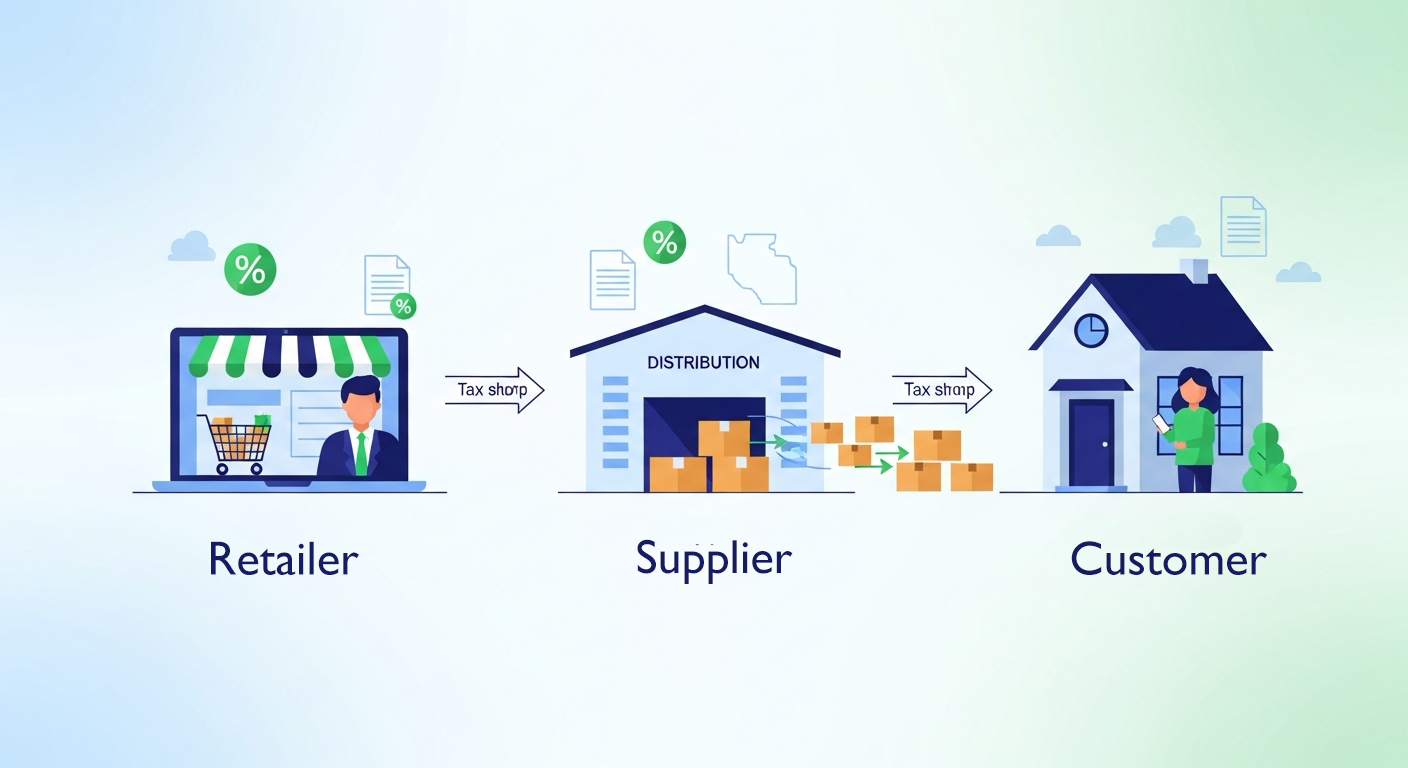
Drop Shipping Sales Tax: Who Pays When Products Ship Direct?
Drop Shipping Sales Tax: Who Pays When Products Ship Direct? Ever placed an order online only to discover it shipped from a completely different company
Related Posts
What Is Sales Tax Nexus? A Beginner’s Guide for Small Business Owners
What Is Sales Tax Nexus? A Beginner’s Guide for Small Business Owners Introduction If you’re a small business owner or run an online store, the...
Read More
Marketplace Facilitator Sales Tax Laws Explained: Who Collects the Sales Tax?
Marketplace Facilitator Sales Tax Laws Explained: Who Collects the Sales Tax? Introduction If you’re an online seller in the U.S., you’ve probably found yourself asking...
Read More
October 2025 Sales Tax Changes: What Every Business Owner Must Know
October 2025 Sales Tax Changes: What Every Business Owner Must Know October 2025 brings significant October 2025 sales tax changes that will reshape how businesses...
Read More