Introduction
Picture this: you open your inbox one morning and spot an official letter from your state’s Department of Revenue. Your stomach drops. You have just been selected for a sales tax audit.
For many ecommerce businesses, Amazon sellers, Shopify merchants, SaaS companies, and small business owners across the U.S., this scenario triggers immediate anxiety. But here is the truth: the sales tax audit process does not have to be a nightmare. With the right knowledge and the right team behind you, you can navigate every stage confidently and protect your bottom line.
This comprehensive guide walks you through the entire sales tax audit process from start to finish. You will learn what triggers a sales tax audit, exactly what auditors look for, how states examine your records, and what you can do at every step to achieve the best possible outcome. Whether you are facing an audit right now or simply want to prepare before one arrives, this guide has you covered.
And remember: no technology tool or software platform can fully replace the judgment, negotiation skills, and professional advocacy that a seasoned sales tax expert brings to the table. Human involvement is not optional when the stakes are this high.
Key Takeaways
✅ A sales tax audit is a formal examination of your business records by a state tax authority to verify that you collected and remitted the correct amount of sales tax.
✅ The sales tax audit process typically has 5–7 stages, from initial notice to final resolution.
✅ Most state audits cover a lookback period of 3–4 years, but fraud or non-filing can extend this to 6 years or even indefinitely.
✅ Common audit triggers include unregistered nexus, inconsistent filings, high exemption certificate usage, and rapid revenue growth.
✅ Having organized records, a clear audit response strategy, and professional representation dramatically improves outcomes.
✅ Every state follows a different process — knowing your specific state’s rules is critical.
✅ Technology helps with compliance, but human expertise is irreplaceable when defending your business in an audit.
What Is a Sales Tax Audit?
DEFINITION: A sales tax audit is the formal examination of a business’s financial records, tax returns, and transactional data by a state tax authority to verify that the correct amount of sales tax was collected, reported, and remitted. The sales tax audit process is initiated by the state and may cover multiple years of activity.
Think of a sales tax audit like a financial colonoscopy. Nobody enjoys the experience, but it can reveal hidden issues before they become life-threatening. A state tax auditor reviews your invoices, sales records, exemption certificates, bank statements, and tax returns to determine whether you owe more than you paid — or in some cases, whether you overpaid.
Unlike income tax audits, which are handled by the IRS, sales tax audits are conducted by individual state revenue departments. This means the process, timeline, penalties, and your rights vary significantly depending on which state is examining your records. California’s audit process through the CDTFA differs from Texas’s process through the Comptroller’s office, which differs from New York’s Department of Taxation and Finance.
What Triggers a Sales Tax Audit?
Understanding what puts a business on a state’s radar is the first step in sales tax audit preparation. Audits are rarely random. Most are data-driven, pattern-based, and tied to specific compliance red flags. Here are the most common triggers:
1. Unregistered Nexus
This is the single most common trigger. States use marketplace data, shipping records, and third-party data feeds to identify businesses generating revenue within their borders without a sales tax permit. Since the landmark South Dakota v. Wayfair Supreme Court decision in 2018, all 45 states with a sales tax enforce economic nexus laws. If your business has crossed the threshold — typically $100,000 in sales or 200 transactions into a state — and you are not registered, you are a prime audit candidate.
For a deeper look at where you may have nexus obligations, see our guide to Economic Nexus Thresholds by State: 2026 Guide.
2. Inconsistent or Suspicious Filing Patterns
States compare your filings over time. If your reported sales dropped suddenly, your taxable vs. exempt ratio changed dramatically, or you stopped filing altogether, the state’s automated systems will flag your account.
3. High Exemption Certificate Usage
Businesses that claim a large percentage of their sales as exempt attract scrutiny. If your exemption claims look unusually high compared to your industry peers, expect questions.
4. Rapid Revenue Growth
Fast-growing businesses — especially ecommerce sellers and SaaS companies — can exceed nexus thresholds in multiple states without realizing it. Rapid sales growth raises the likelihood that you have crossed thresholds without registering.
5. Third-Party Data and Customer Audits
Sometimes you get audited not because of your own filings, but because a customer of yours is being audited and your invoices appear in their records. States cross-reference supplier data all the time.
6. Industry-Targeted Enforcement Campaigns
States periodically launch audit campaigns targeting specific industries. Ecommerce, construction, hospitality, SaaS, and fuel sales are frequent targets. If your industry is under the microscope, so are you.
7. Missed Filings or Late Returns
Even a single missed filing creates a gap in your compliance history. States notice. Filing obligations vary by state and by sales volume — review our breakdown of Sales Tax Filing Frequency.
The Sales Tax Audit Process: A Step-by-Step Guide
So what actually happens during a sales tax audit? Let’s walk through the process stage by stage.
| STEP-BY-STEP OVERVIEW: |
| Step 1: Audit Notice / Initial Contact |
| Step 2: Pre-Audit Meeting and Information Request |
| Step 3: Records Submission |
| Step 4: Auditor’s Records Review and Testing |
| Step 5: Sampling and Projection (if applicable) |
| Step 6: Preliminary Findings and Discussion |
| Step 7: Formal Assessment |
| Step 8: Appeal or Resolution |
Step 1: Audit Notice / Initial Contact
The sales tax audit process officially begins when the state sends you a formal notification letter. This document identifies the audit period, the tax type under examination, the auditor assigned to your case, and a list of requested documents. In California, the CDTFA sends an audit appointment letter. In Texas, the Comptroller’s office issues a similar document outlining scope.
What you should do immediately:
- Document the date you received the notice
- Confirm the audit period and tax type listed
- Do not respond directly without consulting a professional
- Engage qualified audit defense services — this is not the time to go it alone
Here is a critical point: the state is not on your side. Auditors are skilled professionals trained to find discrepancies. Having professional representation from the very first contact sets the right tone and protects your interests from day one.
Step 2: Pre-Audit Meeting and Information Document Request (IDR)
After the initial notice, most states schedule a pre-audit conference or send an Information Document Request (IDR). This is where the auditor outlines exactly which records they want to see. Typically, the IDR covers:
- Sales tax returns for the audit period
- General ledger and trial balance
- Sales invoices and purchase records
- Exemption certificates and resale certificates
- Bank statements and cash records
- Shipping records and purchase orders
- Chart of accounts
Responding to an IDR is both a science and an art. Providing too much information invites additional scrutiny. Providing too little looks suspicious. A qualified sales tax professional understands exactly how to respond — completely, accurately, and strategically. This is where the value of human expertise becomes crystal clear.
Step 3: Records Submission
Once the IDR is received, you have a deadline to submit your records. This deadline is typically 30 to 60 days but varies by state. Missing this deadline can result in the auditor making their own estimates, which rarely benefits the taxpayer.
Organize your records clearly. Provide what is requested, in the format the auditor expects. If your record-keeping has gaps, address them proactively with your representative before submission.
Step 4: Auditor’s Records Review and Testing
This is the core of the sales tax audit process. The auditor examines your submitted records against your filed returns. They are looking for:
- Sales that were not reported as taxable
- Exempt sales that lack valid documentation
- Use tax owed on purchases (items you bought without paying tax that should have been taxed)
- Discrepancies between reported gross sales and actual bank deposits
- Errors in tax calculations on invoices
The auditor may conduct their review on-site at your business location or remotely, depending on the state and the size of your operation. During a California CDTFA audit, for example, records examination is a formal stage where the auditor reviews all sales records, purchase invoices, and resale certificates. Typical California audit durations run 6 to 18 months.
Step 5: Sampling and Statistical Projection
If your transaction volume is very high, auditors often use statistical sampling rather than reviewing every single invoice. They select a representative sample period — usually a few months — examine those transactions in detail, and then extrapolate those findings across the entire audit period.
This is a critical step to understand. If the sampling period happens to capture unusual transactions, seasonal anomalies, or one-time exempt sales, the projection can dramatically overstate your true liability. Challenging sampling methodology is one of the most powerful tools in audit defense. Experienced professionals know how to contest unfair sample periods and negotiate better results.
Step 6: Preliminary Findings and Discussion
After reviewing records or completing sampling, the auditor shares preliminary findings with you. This is your opportunity to:
- Review the proposed adjustments
- Provide additional documentation to address specific issues
- Challenge the sampling methodology if applicable
- Negotiate resolutions for disputed items
Do not treat this stage as a rubber stamp. Many audits are won or dramatically reduced at the preliminary discussion stage. Your representative can negotiate effectively here in ways that software and automated tools simply cannot replicate.
Step 7: Formal Assessment / Notice of Deficiency
If unresolved issues remain after preliminary discussions, the state issues a formal assessment — sometimes called a Notice of Determination or Notice of Deficiency. This document states:
- The total additional tax owed
- Penalties assessed
- Interest accrued
- Your deadline to respond or pay
Penalties vary significantly by state. Florida can impose audit-related penalties as high as 50% of the tax owed. New York adds 10% for the first month of delinquency plus 1% for each additional month. Iowa adds 5% for audit-discovered underpayments, with 75% penalties for fraud. Interest compounds daily in most states.
Step 8: Appeal or Resolution
You are not required to accept the initial assessment. Every state provides an appeals process. You typically have 30 to 90 days from the Notice of Determination to file an appeal. Options include:
- Administrative appeal to the state tax appeals board
- Petition for redetermination (California’s CDTFA gives 30 days)
- Voluntary payment with penalty waiver request
- Negotiated settlement
- Tax court litigation (for large amounts)
Successfully appealing or negotiating a reduced assessment requires deep knowledge of state tax law, strong documentation, and professional advocacy. This is not something to handle alone.
How Far Back Can a Sales Tax Audit Go?
KEY FACT: The standard lookback period for most state sales tax audits is 3 to 4 years from the date a return was filed or its due date, whichever is later. However, if taxable sales are misreported by 25% or more, many states extend this to 6 years. For businesses that never filed returns, some states have an unlimited lookback period.
Understanding your state’s statute of limitations is crucial. Here is why: if you have unaddressed nexus going back five or six years, your exposure can be enormous. The moment you receive an audit notice, one of the first tasks is determining exactly which periods are under review and which ones have closed.
For businesses with prior-period exposure, a Voluntary Disclosure Agreement (VDA) is often a powerful option. Filing a VDA before an audit notice arrives typically limits the lookback period to three years and waives penalties. Once you receive an audit notice, that window closes.
State Audit Lookback Periods: Quick Reference Table
| State | Standard Statute of Limitations | Key Exceptions & Extended Deadlines | Legal Citation |
|---|---|---|---|
| Alabama | 3 years from the return due date or filing date, whichever occurs later. | The timeline is unlimited if no return is filed or if a fraudulent return is submitted to evade tax. The period extends to 6 years if taxable sales are underreported by more than 25%. | Alabama Code 40-2A-7(b)(2) |
| Arizona | 4 years from the return due date or filing date, whichever occurs later. | No time limit applies if a return is not filed or if a fraudulent return is filed to evade tax. The period increases to 6 years if taxable sales are underreported by more than 25%. | Arizona Revised Statute 42-1104 |
| Arkansas | 3 years from the return due date or filing date, whichever occurs later. | The state can assess tax at any time if a fraudulent return is filed or if a mandatory return is omitted. The period increases to 6 years if taxable sales are underreported by more than 25%. | Arkansas Code 26-18-306 |
| California | 3 years from either the end of the calendar month following the quarterly period in question, or the return filing date, whichever occurs later. | In cases involving fraud, intent to evade, or a failure to file a return in the state, the limit extends to 8 years after the month following the close of the quarterly period. | California Tax Code 6487(a) |
| Colorado | 3 years from the return due date or filing date, whichever occurs later. | The state may issue an assessment at any time if a false or fraudulent return is submitted with the intent to evade tax. | Colorado Revised Statute 39-26-125 and 39-26-107 |
| Connecticut | 3 years from either the end of the calendar month following the tax period, or the return filing date, whichever occurs later. | Only one assessment is allowed per period unless there is fraud, intent to evade, or new information. Negligence or intentional disregard triggers a 15% penalty (minimum $50). Fraud brings a 25% penalty. If no return is filed, the state estimates liability plus a 15% penalty (minimum $50). | Connecticut General Statute 12-415(f) |
| District of Columbia | 3 years from the return due date or filing date, whichever occurs later. | Tax can be assessed at any time for unfiled returns or false/fraudulent filings meant to evade tax. The timeline increases to 6 years if taxable sales are underreported by more than 25%. | The District of Columbia Code 47-4301 |
| Florida | 3 years from the return due date, tax due date, filing date, or the time a credit/refund is available, whichever occurs later. | The limit does not apply if a taxpayer fails to file or submits a fraudulent return. However, if a taxpayer discloses their tax liability in writing before being contacted by the department, the standard 3-year limit remains. | Florida Statute 95.091(3) |
| Georgia | 3 years from the return due date or filing date, whichever occurs later. | Assessments can begin at any time if a return is unfiled, false, or filed with the intent to evade sales tax. | Georgia Code 48-2-49 |
| Hawaii | 3 years from the return due date or filing date, whichever occurs later. | Tax can be assessed at any time for unfiled returns or fraudulent filings intended to evade tax, though the state carries the burden of proof regarding fraud. | Hawaii Revised Statute 237-40 |
| Idaho | 3 years from the return due date or filing date, whichever occurs later. | No time limit applies for fraud, willful tax evasion, or intentional failure to pay. For standard unfiled returns, the statute of limitations extends to 7 years from the due date or filing date, whichever is later. | Idaho Code 63-3633 |
| Illinois | 3 years from the date the taxable gross receipts were received. | Assessments are issued on January 1 or July 1. No statute of limitations applies if a taxpayer fails to file a return or submits a fraudulent one. | Illinois Title 86 Administrative Code 130.815 |
| Indiana | 3 years from the return filing date or the end of the calendar year the return was due, whichever occurs later. | The department has no time limit to issue an assessment if the return is unfiled, fraudulent, unsigned, or substantially blank. | Indiana Code 6-8.1-5-2 |
| Iowa | 3 years from the date the return is filed. | The time frame for audit and determination is unlimited if a return is false, fraudulent with intent to evade, or unfiled. | Iowa Code 423.37 |
| Kansas | 3 years from the date the return is filed. | For false or fraudulent returns with intent to evade, assessments or legal collection actions must begin within 2 years of discovering the fraud. Standard assessments cannot pre-date a retailer’s registration by more than 3 years, except in fraud cases. | Kansas Statutes 79-3609(b) |
| Kentucky | 4 years from the return due date or filing date, whichever occurs later. | Sales tax can be assessed at any time if a return is unfiled or fraudulent, with a mandatory assessment notice mailed to the taxpayer. | Kentucky Revised Statute 139.620(1) |
| Louisiana | 3 years from the close of the calendar year in which the tax payment was due. | Failing to file interrupts the timeline; the period does not start until the return is subsequently filed. This interruption rule is waived if a court ruling later makes a transaction taxable that was previously classified as non-taxable under state rules. | Louisiana Revised Statute 47:1580 |
| Maine | 3 years from the return due date or filing date, whichever occurs later. | The timeline extends to 6 years from the filing date if tax is underreported by 50% or more. Fraudulent returns allow for assessments at any time. | Maine Revised Statute Title 36, 141 |
| Maryland | 4 years from the date the tax is due. | The timeline is unlimited in cases of fraud or gross negligence, which the state defines as an underpayment of 25% or more of the sales and use tax due. | Maryland Code 13-1102 |
| Massachusetts | 3 years from the return due date. | The commissioner may issue an assessment at any time without prior notice if a return is unfiled or if a false/fraudulent return is filed to evade tax. | Massachusetts General Laws Chapter 62C, Section 26 |
| Michigan | 4 years from the return due date or filing date, whichever occurs later. | Unregistered/unfiled taxpayers are liable for all taxes across the entire period of liability. If tax liability is fraudulently concealed or federal modifications are unreported, the state has 2 years from discovery to assess tax, penalties, and interest. | Michigan Compiled Laws, Section 205.27a(2) |
| Minnesota | 3.5 years from the return due date or filing date, whichever occurs later. | Tax can be assessed at any time for unfiled or fraudulent returns. If tax liability is underreported by 25% or more, the assessment window extends to 6.5 years from the due date or filing date, whichever is later. | Minnesota Statute 289A.38 |
| Mississippi | 3 years from the date the return is filed. | If a taxpayer fails to file a return on time, the Commissioner will issue an estimated assessment for the tax due. | Mississippi Code 27-65-42 |
| Missouri | 3 years from the return due date or filing date, whichever occurs later. | No time limit exists if a taxpayer files a fraudulent return, neglects to file, or refuses to file a required return. | Missouri Revised Statute 144.220 |
| Nebraska | 3 years from the return filing date or the last day of the calendar month following the tax period, whichever occurs later. | The timeline increases to 6 years if a taxpayer fails to file, submits a false/fraudulent return to evade tax, or underreports the tax liability by more than 25%. | Nebraska Revised Statute 77-2709 |
| Nevada | 3 years from the return filing date or the last day of the calendar month following the tax period, whichever occurs later. | If a taxpayer fails to file or the state claims an additional amount, notice must be served within 8 years of the end of the tax period’s following month. There is no time limit for fraud or intentional evasion. | Nevada Revised Statute 360.355 |
| New Jersey | 4 years from the date the return is filed. | The state can assess tax at any time if a return is unfiled or if a willfully false or fraudulent return is submitted with the intent to evade. | New Jersey Statute 54:32B-27(b) |
| New Mexico | 3 years from the close of the calendar year in which the tax payment was due. | For false or fraudulent returns submitted with intent to evade tax, the assessment window extends to 10 years from the end of the calendar year the tax was originally due. | New Mexico Statute 7-1-18 |
| New York | 3 years from the return due date or filing date, whichever occurs later. | Assessments can be issued at any time if a required return is unfiled or if a willfully false or fraudulent return is submitted to evade tax. | New York Tax Law 1147(b) |
| North Carolina | 3 years from the return due date or filing date, whichever occurs later. | No limitation period applies if a taxpayer fails to file, submits a fraudulent return, or attempts to evade or defeat the tax through fraudulent means. | North Carolina General Statute 105-241.8 |
| North Dakota | 3 years from the return due date or filing date, whichever occurs later. | The window increases to 6 years if an audit reveals tax due was 25% or more above what was reported, or if a taxpayer fails to file a return. The limitation period does not apply to fraudulent returns or intentional tax evasion. | North Dakota Century Code 57-39.2-15 |
| Ohio | 4 years from the return due date or filing date, whichever occurs later. | The statute of limitations does not apply if a vendor collects sales tax from consumers but fails to remit it, fails to file a return entirely, or signs a written time-limitation waiver. | Ohio Revised Code 5739.16(A) |
| Oklahoma | 3 years from the return due date or filing date, whichever occurs later. | Tax may be assessed or court collection proceedings may begin at any time if a return is false, fraudulent, unfiled with intent to evade, or if there is a willful attempt to defeat or evade tax. | Oklahoma Statute, Title 68, Section 223 |
| Pennsylvania | 3 years from the return filing date or the close of the year in which the liability was incurred. | The department can issue multiple assessments for the same year within this period. No credit is granted for penalties that were previously paid or assessed. | Pennsylvania 72 P.S. 7258 |
| Rhode Island | 3 years from the return filing date or the 15th of the month in which the return was due, whichever occurs later. | The limitation period is completely waived in cases involving fraud, intent to evade sales tax, or a failure to file a return. | Rhode Island General Laws 44-19-13 |
| South Carolina | 3 years from the return due date or filing date, whichever occurs later. | The limit does not apply if there is a fraudulent intent to evade taxes, a failure to file a return, or an understatement of tax liability by 20% or more. | South Carolina Code Section 12-54-85 |
| South Dakota | 3 years from the date the return is filed. | The timeline is entirely waived if a taxpayer fails to hold a required license/permit, fails to file a return, fails to fully remit the tax reported on a return, or files a fraudulent report. | South Dakota Codified Laws 10-59-16 |
| Tennessee | 3 years from the close of the calendar year in which the return was filed. | Tax can be assessed or collection actions initiated at any time, with or without an official assessment, if a taxpayer fails to file or submits a false/fraudulent return to evade tax. | Tennessee Code 67-1-1501(b) |
| Texas | 4 years from the date the tax is due. | The comptroller may assess and collect tax, penalties, and interest at any time if a return is unfiled or if a false/fraudulent return is submitted to evade tax. The limit is also waived for understatements of 25% or more (defined as a gross error). | 34 Texas Administrative Code 3.339(a) |
| Utah | 3 years from the date the return is filed. | The standard statute of limitations is waived if the tax deficiency stems from fraud or a failure to file a return. | Utah Code 59-12-110 |
| Vermont | 3 years from the return due date or filing period, whichever occurs later. | Sales tax can be assessed at any time if a return is unfiled or if a willfully false/fraudulent return is filed to evade tax. The period extends to 6 years from the filing date if the tax was understated by 20% or more. | Vermont Statutes Annotated, Title 32, 9815(b) |
| Virginia | 3 years from the date the tax is due. | For unfiled returns or false/fraudulent returns filed with intent to evade payment, the state may issue an assessment or start court collection proceedings at any time within 6 years of the original tax due date. | Virginia Code 58.1-634 |
| Washington | 4 years from the close of the tax year in which the liability was incurred. | The time limit is waived if a taxpayer is unregistered, has committed fraud or misrepresentation, or has signed a written waiver of the limitation period. | Washington Revised Code 82.32.050(4) |
| West Virginia | 3 years from the return due date or filing date, whichever occurs later. | Assessments can be made at any time if no return was filed or if a false or fraudulent return was submitted with the intent to evade tax. | West Virginia Code 11-10-15 |
| Wisconsin | 4 years from the date the return is filed. | The evaluation window can be extended beyond the standard 4 years if the taxpayer provides written consent. | Wisconsin Statute 77.59(3) |
| Wyoming | 3 years from the date of delinquency. | No specific statutory exceptions were detailed in the source information. | Wyoming Statute 39-15-110(b) |
Note: Rules change. Always confirm current lookback periods with a qualified sales tax professional.
How to Prepare for a Sales Tax Audit: Sales Tax Audit Preparation Essentials
The best audit is one you never have to sweat through. While you cannot guarantee you will never be selected, smart sales tax audit preparation dramatically reduces your exposure and gives you a strong foundation if an audit does come.
Maintain Impeccable Records
Organized, complete, and accessible records are your best defense. Keep the following for at least the length of your state’s lookback period (ideally longer):
- All sales invoices and receipts
- Exemption and resale certificates for every exempt sale
- Purchase records and use tax documentation
- Filed sales tax returns and confirmation numbers
- Bank statements and deposit records
- Shipping records and proof of delivery
Monitor Your Nexus Footprint Continuously
Economic nexus thresholds can be crossed quietly and quickly, especially for fast-growing ecommerce businesses. Review your sales by state monthly or quarterly. See our Nexus Analysis and Risk Review service to identify exposure before a state does.
Validate Exemption Certificates Proactively
Invalid or expired exemption certificates are a leading audit finding. Audit-ready businesses verify certificates at the time of sale, re-collect them on a regular schedule, and store them in an organized system.
Register Where You Have Nexus
If you know you have crossed thresholds in states where you are not registered, act now. Proactive registration and voluntary disclosure almost always produce better outcomes than waiting for the state to find you.
Do Not Navigate an Audit Alone
Even the most sophisticated accounting software cannot replace human judgment in an audit scenario. A skilled sales tax professional can limit scope, contest sampling methodology, negotiate assessments, and preserve your rights at every step. No automation tool files appeals, argues exemptions, or builds audit narratives on your behalf.
DIY Audit Response vs. Professional Audit Defense Services: A Comparison
| Factor | DIY Response | Professional Audit Defense Services |
| Understanding State-Specific Rules | High risk of errors | Expert knowledge of each state’s process |
| Responding to the IDR | Risk of over-disclosure | Strategic, complete, and accurate responses |
| Challenging Sampling Methodology | Rarely attempted | Routinely contested when unfair |
| Negotiating Preliminary Findings | Limited leverage | Professional negotiation skills |
| Filing Appeals | Complex and error-prone | Structured appeal with supporting evidence |
| Outcome | Often higher liability | Frequently reduced or eliminated liability |
| Time Investment (Business Owner) | Extremely high | Minimal — experts handle the process |
What Happens During a Sales Tax Audit for SaaS and Ecommerce Businesses?
SaaS companies and ecommerce sellers face unique considerations during the sales tax audit process. Here is what sets your audit experience apart:
SaaS Tax Audits
SaaS taxation varies dramatically by state. Some states tax SaaS as a tangible personal property equivalent. Others exempt it entirely. Some tax only B2C sales, not B2B. During a sales tax examination, auditors will closely scrutinize:
- How you categorized your SaaS revenue (taxable vs. exempt by state)
- Whether you applied the correct tax treatment for each customer’s state
- Any bundled transactions that include taxable elements
- Exemption certificates for business customers claiming a B2B exemption
Ecommerce and Amazon Seller Audits
If you sell through Amazon FBA, Shopify, or your own ecommerce platform, auditors focus heavily on:
- Physical nexus created by FBA inventory stored in state warehouses
- Economic nexus — whether you have exceeded state thresholds
- Marketplace facilitator rules — where Amazon collects tax on your behalf vs. where you remain responsible
- Taxability of the products you sell in each state
Shopify users should also be aware that Shopify’s automatic tax calculation features can produce errors. For a full breakdown of common configuration mistakes, see our article on Shopify Sales Tax Setup: Are These Mistakes Costing You?
Common Mistakes Businesses Make During a Sales Tax Audit
Avoid these costly errors during the sales tax audit process:
- Responding without professional representation: Auditors are trained professionals. Going it alone almost always leads to a worse outcome.
- Over-producing records: Providing more than what was requested opens doors for the auditor to examine additional issues.
- Failing to challenge sampling: An unfair sample period can multiply a small problem into a massive liability. Always evaluate whether sampling methodology is fair.
- Ignoring exemption certificate gaps: If you claimed sales as exempt but cannot produce valid certificates, those sales will likely become taxable in the audit.
- Missing appeal deadlines: Most states give you 30 to 90 days to appeal. Missing that window is catastrophic.
- Assuming software made all the right calls: Tax automation tools apply rules that may be outdated, incorrectly configured, or simply wrong for your business model. Human review is essential.
- Treating the auditor as an adversary from the start: A professional representative can manage the relationship with the auditor constructively while still protecting your interests.
Sales Tax Audit Checklist: Actionable Compliance Steps
PRE-AUDIT PREPARATION
- Conduct a nexus review across all states where you have sales activity
- Register for sales tax in all states where you have nexus
- Verify all exemption certificates are current, complete, and properly stored
- Reconcile filed sales tax returns against your actual sales data
- Maintain organized invoices, purchase records, and bank statements for at least 4 years
- Establish a written sales tax compliance policy and train staff
- Review taxability of all product and service categories in each state where you sell
WHEN YOU RECEIVE AN AUDIT NOTICE
- Do not respond directly — engage professional audit defense services immediately
- Document the audit notice date, period covered, and auditor contact information
- Confirm the legitimacy of the audit notice
- Identify the statute of limitations for the audit period
- Gather all records related to the audit period
- Respond to the IDR on time and through your representative
DURING THE AUDIT
- Review the auditor’s sampling methodology for fairness
- Provide additional documentation to address findings before assessment
- Evaluate preliminary findings with your advisor
- Negotiate adjustments where you have legitimate grounds
- Track all communications with the auditor in writing
AFTER THE AUDIT
- Review the formal assessment carefully with your advisor
- File an appeal if you have legitimate grounds within the deadline
- Implement compliance improvements to prevent future audits
- Consider a voluntary disclosure in any states where you have unaddressed exposure
Real-World Examples: How the Sales Tax Audit Process Plays Out
Example 1: The Amazon FBA Seller
A growing Shopify and Amazon seller based in Nevada had been operating for three years without registering for sales tax outside of their home state. When California’s CDTFA flagged the business for shipping high volumes of goods into the state from FBA warehouses in Los Angeles and San Bernardino, they received an audit notice.
The auditor’s initial IDR covered four years of records and proposed using statistical sampling. Without professional representation, the seller initially tried to respond directly. The preliminary assessment came back at over $180,000 including penalties and interest.
After engaging qualified audit defense services, the representation team challenged the sampling methodology, documented thousands of exempt business-to-business transactions, and negotiated directly with the auditor. The final assessment was reduced to under $45,000 — a saving of more than $135,000. Technology helped organize the records. But it was human expertise that turned the tide.
Example 2: The SaaS Company with Multi-State Exposure
A rapidly growing SaaS company had been using an automated tax platform for two years. The software had been misconfigured to treat all SaaS revenue as exempt in states where the service was actually taxable. When New York initiated a state tax audit, the auditor found three years of unreported taxable SaaS revenue.
With a professional advisor on board, the company was able to demonstrate reasonable cause for the configuration error, apply for penalty abatement, and negotiate a structured payment plan. The final resolution included full payment of back taxes and interest, but all penalties were waived — saving over $60,000. The lesson? Automation tools create the illusion of compliance. Human oversight catches what the software misses.
What Are Audit Defense Services and Why Do You Need Them?
Audit defense services are professional representation services provided by qualified sales tax experts, CPAs, or tax attorneys to help businesses respond to, negotiate, and resolve state tax audits. These services typically include:
- Reviewing the audit notice and identifying the scope
- Responding to Information Document Requests on your behalf
- Organizing and presenting your records strategically
- Challenging unfair sampling methodology
- Negotiating preliminary findings with the auditor
- Filing formal appeals when warranted
- Implementing compliance improvements post-audit
Think about it this way. You would not represent yourself in a federal criminal case just because you read a book about law. A sales tax audit is your business’s legal confrontation with the state. Professional representation is not a luxury. It is a necessity.
My Sales Tax Firm provides comprehensive Audit and Notice Response Support for businesses of all sizes. Our team has over 15 years of experience navigating the sales tax audit process across all 50 states.
Authoritative External Sources and References
Sales Tax Institute — Best Practices for Managing a Sales Tax Audit
Texas Comptroller of Public Accounts — The Auditing Process
New York Codes, Rules and Regulations — Part 536, Penalties and Interest
TaxJar — Statute of Limitations for Sales Tax Audits by State
TaxValet — State-by-State Statute of Limitation Periods
Conclusion
The sales tax audit process is one of the most complex and potentially costly regulatory experiences a U.S. business can face. From the initial notice to the final resolution, every stage of the sales tax audit process carries risk — and opportunity.
Understanding what triggers an audit, knowing what auditors look for, maintaining thorough records, and responding strategically at each stage can make the difference between a manageable resolution and a financially devastating outcome.
But here is the most important thing to remember: no software platform, automation tool, or AI-powered compliance engine can replicate the judgment, negotiation skill, and professional advocacy of an experienced sales tax expert. Technology is a powerful support tool. Human expertise is what wins audits.
Whether you are preparing your defenses before an audit arrives, responding to a notice right now, or rebuilding your compliance program after an examination, the right team makes all the difference. That team exists at My Sales Tax Firm.
FAQ
During a sales tax audit, a state tax authority formally examines your business records, tax returns, invoices, exemption certificates, and bank statements to verify you collected and remitted the correct amount of sales tax. The process typically runs 6 to 18 months and includes an initial notice, an information document request, records review, potential statistical sampling, preliminary findings, a formal assessment, and an appeal stage.
Common triggers include unregistered nexus in a state where you have sales activity, inconsistent or suspicious filing patterns, high rates of exempt sales without valid certificates, rapid revenue growth, third-party data from a customer audit, missed filings, and state-wide industry enforcement campaigns. Many audits are data-driven and initiated after automated systems detect compliance red flags.
Most states have a standard lookback period of 3 to 4 years from the date a return was filed or its due date. If taxable sales are underreported by 25% or more, many states extend this to 6 years. For businesses that never filed returns, some states like California and New York can look back indefinitely. The specific statute of limitations varies by state.
Effective sales tax audit preparation involves maintaining complete records for at least 4 years, validating exemption certificates at the time of sale, monitoring your economic nexus exposure by state, registering proactively where you have nexus, and engaging a qualified sales tax professional before an audit arrives. When you receive a notice, do not respond alone — engage professional audit defense services immediately.
Yes. Every state provides an administrative appeals process. Typical deadlines run 30 to 90 days from the date of the formal assessment. Appeals can challenge the auditor's methodology, sampling approach, application of exemptions, and penalty calculations. Many assessments are significantly reduced or overturned on appeal with professional representation.
States typically request sales invoices and receipts, exemption and resale certificates, purchase records, filed sales tax returns with confirmation numbers, general ledger and trial balance, bank statements, shipping records, and your chart of accounts. Having these organized and accessible before an audit notice arrives is a hallmark of audit-ready businesses.
Statistical sampling is a method auditors use when transaction volumes are too high to review individually. The auditor selects a representative sample period, examines those transactions in detail, calculates an error rate, and projects that rate across the full audit period. This method can dramatically overstate liability if the sample period is not representative. Challenging the sampling methodology is one of the most important and effective audit defense strategies available.
Tax automation software is a valuable compliance tool, but it does not guarantee audit protection. Software can be misconfigured, apply outdated rules, or fail to account for state-specific nuances in taxability, exemptions, or nexus determinations. Many audits uncover problems that existed within automated systems for years. Human oversight and professional compliance support are essential complements to any technology solution.
Featured
Everything You Need To Know About SaaS Sales Tax
Everything You Need To Know About SaaS Sales Tax Sales tax for SaaS businesses is one of the most confusing and overlooked areas of tax
What Is Sales Tax Nexus? A Beginner’s Guide for Small Business Owners
What Is Sales Tax Nexus? A Beginner’s Guide for Small Business Owners Introduction If you’re a small business owner or run an online store, the

Is Your Ed-Tech Taxable? A Guide to Online Tutoring Sales Tax
Is Your Ed-Tech Taxable? A Guide to Online Tutoring Sales Tax As an ed-tech entrepreneur, you’ve built a business to empower students, not to become

Subscription Box Sales Tax Guide: Master E-commerce Tax Compliance
Subscription Box Sales Tax Guide: Master E-commerce Tax Compliance Are you running a subscription box business and feeling overwhelmed by the maze of sales tax
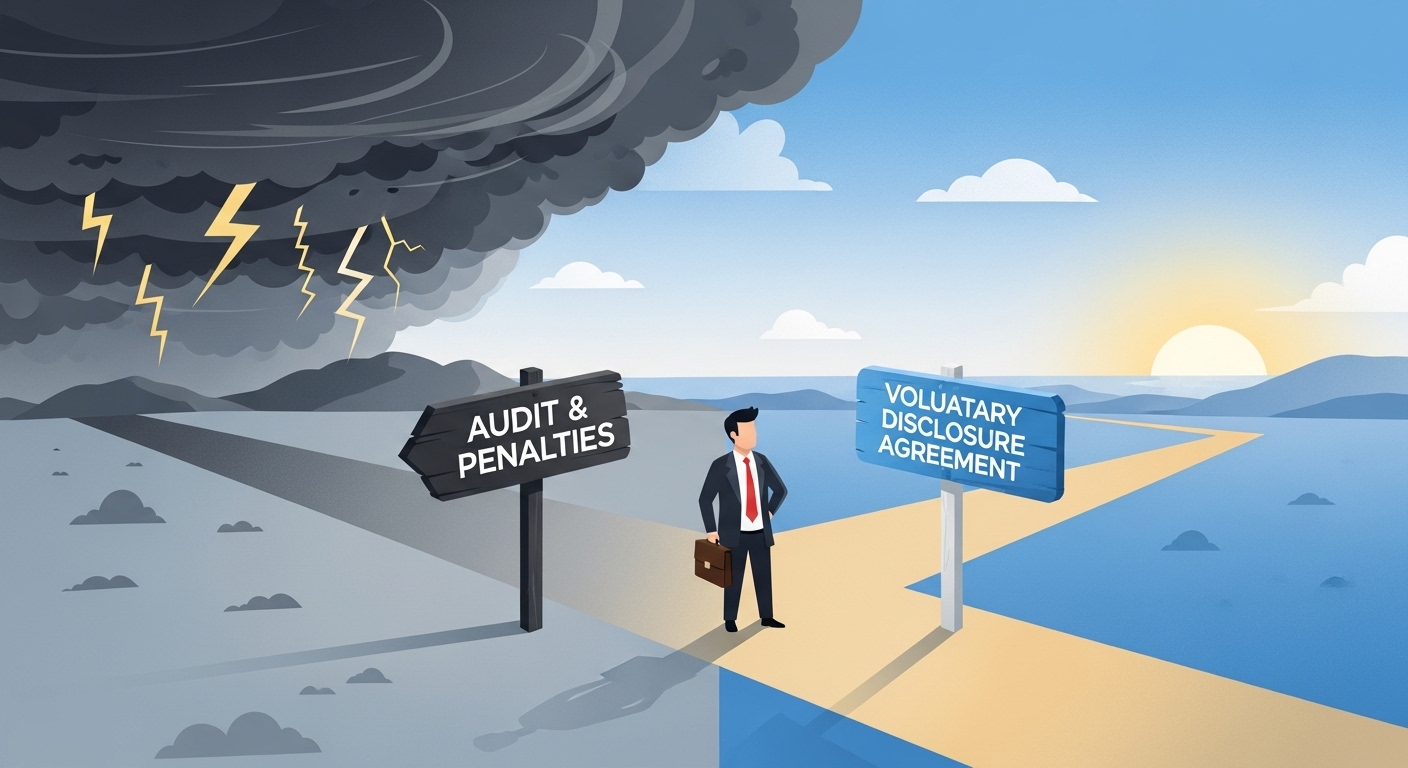
Sales Tax Liabilities? How a Voluntary Disclosure Agreement (VDA) Helps
Cut sales tax risks with a Voluntary Disclosure Agreement. Limit penalties, reduce lookback, and protect your business from audits.

Mixed Sales Tax: Products & Services Compliance Guide
Mixed Sales Tax Compliance for Products and Services Do you sell both products and services to your customers? Then you’re navigating one of the trickiest
Related Posts

How to Avoid Sales Tax Audits (And What to Do if You’re Audited)
How to Avoid Sales Tax Audits (And What to Do if You’re Audited) Introduction Let’s be honest—sales tax audits are nobody’s idea of fun. For...
Read More
The Hidden Sales Tax Risk for Small Business Owners in the U.S.
The Hidden Sales Tax Risk for Small Business Owners in the U.S. Introduction — This Risk Could Destroy Your Business Let’s be honest. Most small...
Read More
SaaS Sales Tax by State: Which States Tax Software in 2026
SaaS Sales Tax by State: Which States Tax Software in 2026? SaaS Sales Tax by State: Which States Tax Software in 2026? If you sell...
Read More