Introduction
Have you ever wondered if selling on Amazon puts your business at risk for unexpected tax bills? You are certainly not alone. Many online sellers mistakenly believe that Amazon handles every single tax obligation for them. Unfortunately, this assumption often leads to devastating financial penalties. Navigating the complex world of ecommerce sales tax requires proactive planning and a deep understanding of state laws.
Specifically, you must understand how Amazon FBA sales tax nexus impacts your business. The rules change constantly across all fifty states. Furthermore, states aggressive hunt for tax revenue targets out of state sellers more than ever before. Do you know where your inventory sits right now? If Amazon moves your products across state lines, you might unknowingly trigger a legal obligation to collect and remit taxes. Therefore, we created this comprehensive guide to help you master Amazon compliance. We will thoroughly explore FBA inventory nexus, break down marketplace facilitator laws, and give you the exact steps needed to protect your profit margins.
Key Takeaways
Storing inventory in an Amazon Fulfillment Center establishes physical presence.
Amazon FBA sales tax nexus occurs when your products are warehoused in a new state.
Marketplace facilitator laws force Amazon to collect taxes on platform sales, but they do not erase your underlying nexus footprint.
You still carry sales tax obligations for independent sales channels like Shopify if FBA inventory creates nexus in a state.
Conducting a formal nexus study remains the most effective way to identify your exact tax liabilities across the U.S.
What Is Amazon FBA Sales Tax Nexus?
Understanding your tax liabilities begins with mastering core definitions. So, what exactly is nexus? Essentially, nexus is simply a legal connection between your business and a specific state. When you establish this connection, the state gains the legal right to demand tax collection.
Amazon FBA sales tax nexus is a specific type of physical connection created when Amazon stores your inventory in their fulfillment centers, triggering an obligation for you to collect and remit state sales tax.
Consequently, simply sending your products to Amazon FBA can create a massive tax footprint. You do not need to own a warehouse or hire employees in a state to trigger physical nexus. The mere presence of your goods sitting on a shelf creates the legal link.
How Does Physical Presence Create FBA Inventory Nexus?
Historically, states required a substantial physical presence to enforce tax collection. Today, the rules are much stricter. States view your inventory as your property. Therefore, when Amazon moves your property into a Texas or California warehouse, you officially establish a physical presence there.
This concept is known as FBA inventory nexus. Think of the Amazon fulfillment network like a giant, ever shifting chessboard. Amazon moves your pawns around to optimize shipping speeds. However, every time a pawn lands in a new state, a new tax obligation potentially springs to life. Furthermore, you cannot control where Amazon sends your goods. As a result, you must constantly monitor your inventory reports to stay compliant.
When Should Sellers Worry About Amazon FBA Sales Tax Nexus?
You should start worrying about Amazon FBA sales tax nexus the moment you sign up for the Fulfillment by Amazon program. Many beginners assume they fall under a small business exemption. Sadly, physical nexus does not feature a minimum sales threshold. Even one single unit of unsold inventory sitting in a Pennsylvania warehouse creates a legal obligation.
Are you selling exclusively on Amazon? If so, marketplace facilitator laws might handle the collection side. However, if you also sell on a Shopify store or a standalone website, you must pay close attention. The nexus created by Amazon FBA bleeds over into your other sales channels. Consequently, you must collect tax on your independent website sales for any state where Amazon stores your inventory.
Which States Enforce FBA Inventory Nexus Laws?
Almost every state with a general sales tax enforces physical presence rules based on inventory. Currently, 45 states plus Washington D.C. levy a sales tax. If Amazon operates a fulfillment center in any of these states, your inventory could end up there.
States like California, Washington, and Texas are notoriously aggressive. They actively audit Amazon sellers. For example, the California Department of Tax and Fee Administration (CDTFA) routinely pursues sellers who fail to register after storing inventory within state lines. Moreover, states frequently share information. Therefore, ignoring your FBA inventory nexus in one state could trigger investigations from neighboring jurisdictions. To accurately track these liabilities, you need a professional nexus study.
How Do Marketplace Facilitator Laws Affect Amazon FBA Sales Tax Nexus?
In 2018, the Supreme Court decision in South Dakota v. Wayfair changed everything. Subsequently, states rolled out marketplace facilitator laws. These laws require massive platforms like Amazon to automatically calculate, collect, and remit sales tax on behalf of third party sellers.
Many sellers cheered. They believed Amazon compliance was finally automated. However, marketplace facilitator laws do not eliminate Amazon FBA sales tax nexus. They merely shift the collection burden for platform specific sales. You still possess nexus. You still have a legal connection to the state. Furthermore, many states still require you to register for a tax permit and file a zero liability return, even if Amazon handles all the actual money.
Does Amazon FBA Create Nexus After Marketplace Laws Passed?
Yes, absolutely. This remains the biggest point of confusion for modern ecommerce brands. Amazon FBA still creates nexus. The physical presence of your inventory still triggers state laws.
Marketplace facilitator laws only cover the transactions happening strictly on the marketplace. If you run a multi-channel operation, the state looks at your entire business entity. Because your Amazon inventory gives you physical nexus in a state, you are legally required to collect sales tax on transactions originating from your own independent website shipping to that same state. Ultimately, Amazon FBA sales tax nexus acts as an anchor, dragging your other sales channels into the tax net.
Why Does Ecommerce Sales Tax Matter for Multi-Channel Sellers?
Ecommerce sales tax represents a massive liability risk for multi-channel sellers. Imagine you sell heavily on Amazon, but you also launch a successful Shopify store. Amazon collects the tax for the Amazon sales. However, nobody is collecting the tax for your Shopify sales.
If you have Amazon FBA sales tax nexus in twenty states, you must register, collect, and remit taxes in all twenty states for your Shopify orders. If you fail to do this, the unpaid tax comes directly out of your own pocket during an audit. Moreover, states will assess hefty penalties and interest. Therefore, managing your overall ecommerce sales tax strategy is absolutely vital for your business survival.
What Happens If You Ignore Amazon FBA Sales Tax Nexus?
Ignoring your tax responsibilities leads to disastrous consequences. States employ dedicated audit teams specifically trained to track down out of state FBA sellers. They can subpoena records directly from Amazon. Consequently, hiding is no longer a viable business strategy.
If an auditor catches you, you will owe all uncollected back taxes. Additionally, the state will slap you with penalties and compounded interest. In severe cases, states can freeze your business bank accounts or pursue you personally as the business owner. To protect your assets, you might need professional audit defense services to negotiate with aggressive state departments.
How to Determine Your Amazon FBA Sales Tax Nexus Status
Determining your precise status requires digging into your Amazon Seller Central reports. You must pull an Inventory Event Detail report to see exactly where Amazon has routed your products.
However, deciphering these reports takes significant time. Furthermore, comparing your footprint against the shifting regulations of 45 different states requires expert knowledge. You must analyze both physical presence and economic nexus thresholds. To simplify this overwhelming process, partnering with a qualified CPA ensures complete accuracy. We highly recommend reviewing guidelines from the Sales Tax Institute for additional baseline education, but professional guidance remains irreplaceable.
What Are the Sales Tax Obligations for Amazon Sellers Today?
Today, sales tax obligations for Amazon sellers look very different than they did a decade ago. Your primary obligations include tracking your inventory footprint, registering for sales tax permits in states where you have nexus, and filing regular returns.
Even if you only sell on Amazon, some states require you to file gross receipts tax returns or B&O taxes. Washington State, for instance, requires sellers to pay Business and Occupation tax even if the marketplace collects the retail sales tax. Therefore, total Amazon compliance extends far beyond standard sales tax collection. You must understand the nuances of local jurisdictional filings and annual reporting requirements.
Where Can You Find the Best FBA Sales Tax Guide Resources?
Finding reliable information is incredibly difficult. A quick internet search yields outdated advice from 2017. Because tax laws evolve constantly, you must rely on authoritative, frequently updated sources.
You should regularly consult state Department of Revenue websites. Additionally, the Streamlined Sales Tax Governing Board (SSTGB) provides excellent resources for states participating in the streamlined agreement. Finally, working directly with a dedicated sales tax firm ensures you receive a customized FBA sales tax guide tailored specifically to your exact business model and product taxability profile.
How Does Amazon Compliance Work for Independent Websites?
Amazon compliance does not protect your independent website. Let us repeat that carefully. Amazon only handles Amazon. If you use FBA to fulfill orders for your WooCommerce or BigCommerce site through multi-channel fulfillment, you bear the entire burden of tax compliance.
You must configure your website shopping cart to calculate the exact local and state tax rates. You must collect the funds from your customer at checkout. Subsequently, you must remit those funds to the correct state treasury on time. A failure at any step of this process creates immediate audit exposure.
Why Is Amazon FBA Sales Tax Nexus Tricky for Shopify Sellers?
Shopify provides robust tools for sellers, but it is not a marketplace facilitator. Shopify will not automatically file your returns or remit your funds. It only acts as software.
This makes Amazon FBA sales tax nexus incredibly tricky for Shopify merchants. You must manually tell Shopify where you have nexus. If you do not check the right boxes in your Shopify tax settings, the platform will not collect a single penny. Consequently, many sellers go years before realizing they missed a massive tax obligation caused entirely by their Amazon FBA warehouse footprint.
What Should CFOs Know About Amazon FBA Sales Tax Nexus?
For CFOs and finance teams, FBA inventory nexus represents an off balance sheet liability that must be identified immediately. Accruing historical liabilities can drastically impact company valuations during mergers and acquisitions.
Furthermore, CFOs must understand that voluntary disclosure agreements (VDAs) offer a safe path to compliance. If you discover a massive historical liability, do not simply register and start paying. A VDA allows you to come forward anonymously, limit the lookback period, and frequently get penalties waived completely. Proper financial strategy requires addressing these state tax exposures before a state auditor issues a formal notice.
Examples and Case Studies
The Multi-Channel Trap
Sarah owns an electronics brand. She sells 80% of her goods on Amazon and 20% on her own Shopify site. Amazon routes her FBA inventory into 25 different states. Because marketplace facilitator laws exist, Amazon handles the tax for her Amazon sales. However, Sarah assumed this protected her entire business. During a routine audit by the State of Illinois, the auditor noted her FBA inventory nexus. Because she never collected tax on her Shopify sales shipping to Illinois, the state assessed her $45,000 in back taxes and penalties.
The Independent FBA Seller
Mark sells private label kitchenware exclusively on Amazon. He has no other websites. He noticed his inventory sitting in Georgia and worried about Amazon FBA sales tax nexus. However, because Georgia enacted strong marketplace facilitator laws, Amazon handles 100% of the collection and remittance for Mark. Mark still needed to understand his obligations. In some states, he was still required to hold a valid permit and file zero-dollar returns to maintain strict Amazon compliance.
Physical Nexus vs. Economic Nexus
| Feature | Physical Nexus (FBA Inventory) | Economic Nexus (Wayfair) |
| Trigger Mechanism | Property stored within the state. | Sales revenue or transaction volume. |
| Threshold Limits | No minimum. 1 item triggers nexus. | Usually $100,000 or 200 transactions. |
| Impact of Amazon FBA | Directly creates physical nexus. | Amazon sales count toward economic thresholds in many states. |
| Seller Action Required | Must track warehouse locations. | Must track total gross sales per state. |
| Risk Level | High. Frequently audited by states. | High. Easy for states to track via software. |
Common Mistakes
Relying Completely on Amazon: Assuming marketplace facilitator laws cover your off-Amazon sales channels.
Ignoring Zero Dollar Returns: Failing to file tax returns in states where you have active permits, simply because Amazon collected the tax.
Registering Too Late: Waiting for an audit notice instead of utilizing Voluntary Disclosure Agreements to reduce penalties.
Misunderstanding Sourcing Rules: Failing to realize that some states use origin-based sourcing while others use destination-based sourcing for independent website sales.
Neglecting Inventory Reports: Never checking Amazon Seller Central to identify where inventory is actually housed.
Compliance Checklist
Pull Your Inventory Reports: Download your FBA Inventory Event Detail report to map your physical footprint.
Conduct a Nexus Study: Compare your inventory locations against current state laws to determine exact liabilities.
Evaluate All Sales Channels: Determine how your FBA inventory nexus impacts your Shopify, Magento, or direct invoice sales.
Register for State Permits: Apply for sales tax permits only in the states where you have confirmed nexus and actionable sales.
Configure Shopping Carts: Update your independent website to collect exact local and state tax rates.
Automate Filing: Utilize reliable tax software or partner with a CPA firm to handle monthly and quarterly filings.
Monitor Constantly: Review your nexus footprint every quarter, as Amazon frequently opens new fulfillment centers.
Conclusion
Mastering state tax laws is absolutely critical for the long term survival of your ecommerce business. As we have discussed, Amazon FBA sales tax nexus creates very real, very serious legal obligations for online sellers. The moment your inventory crosses state lines and enters a fulfillment center, your tax footprint expands. While marketplace facilitator laws certainly ease the burden for marketplace-only sales, multi-channel sellers must remain extremely vigilant. You cannot ignore the physical presence created by your Amazon inventory. By taking proactive steps, conducting thorough nexus studies, and actively monitoring your sales channels, you can successfully navigate the complexities of ecommerce sales tax and protect your hard earned profit margins from aggressive state auditors.
FAQ
Yes. Storing inventory in an Amazon fulfillment center creates physical presence in that state. This legally establishes Amazon FBA sales tax nexus, obligating you to follow state tax laws.
No. Marketplace facilitator laws merely force Amazon to collect tax on marketplace sales. They do not remove your legal physical presence. If you sell on other platforms like Shopify, your FBA nexus still requires you to collect tax on those independent sales.
If you sell exclusively on Amazon, marketplace facilitator laws usually handle the tax collection. However, some states still require you to hold a valid sales tax permit and file periodic informational or zero liability returns to remain fully compliant.
Yes. State Departments of Revenue routinely request and receive massive data dumps directly from Amazon. They possess dedicated task forces designed to identify non compliant out of state sellers based on FBA warehouse data.
If you discover historical tax liabilities, do not simply register for a new permit. You should engage a CPA to initiate a Voluntary Disclosure Agreement (VDA). A VDA allows you to come forward anonymously, pay back taxes, and usually get all penalties waived.
Physical nexus is established by having property, employees, or inventory (like FBA goods) in a state. Economic nexus is established strictly by exceeding a specific sales revenue or transaction volume threshold, regardless of physical location.
Featured

Avalara VS. TaxJar – Which is Better?
Avalara VS. TaxJar – Which is Better? Updated: November 05, 2025 The modern business landscape is a maze of digital commerce, multi-state operations, and constantly
What Is Amazon FBA Sales Tax Nexus? A Complete Guide
What Is Amazon FBA Sales Tax Nexus? A Complete Guide Introduction Have you ever wondered if selling on Amazon puts your business at risk for

Score Big: Your E-commerce Guide to Back-to-School Sales Tax Holidays!
Score Big: Your E-commerce Guide to Back-to-School Sales Tax Holidays! Introduction: The Back-to-School Rush and Sales Tax Savings Hey there, fellow e-commerce entrepreneurs and small
SaaS Sales Tax by State: Which States Tax Software in 2026
SaaS Sales Tax by State: Which States Tax Software in 2026? SaaS Sales Tax by State: Which States Tax Software in 2026? If you sell
What Amazon Isn’t Telling You About Your Sales Tax Liability
What Amazon Doesn’t Tell You About Your Sales Tax Liability If you sell on Amazon using FBA, you probably think Amazon handles all your sales
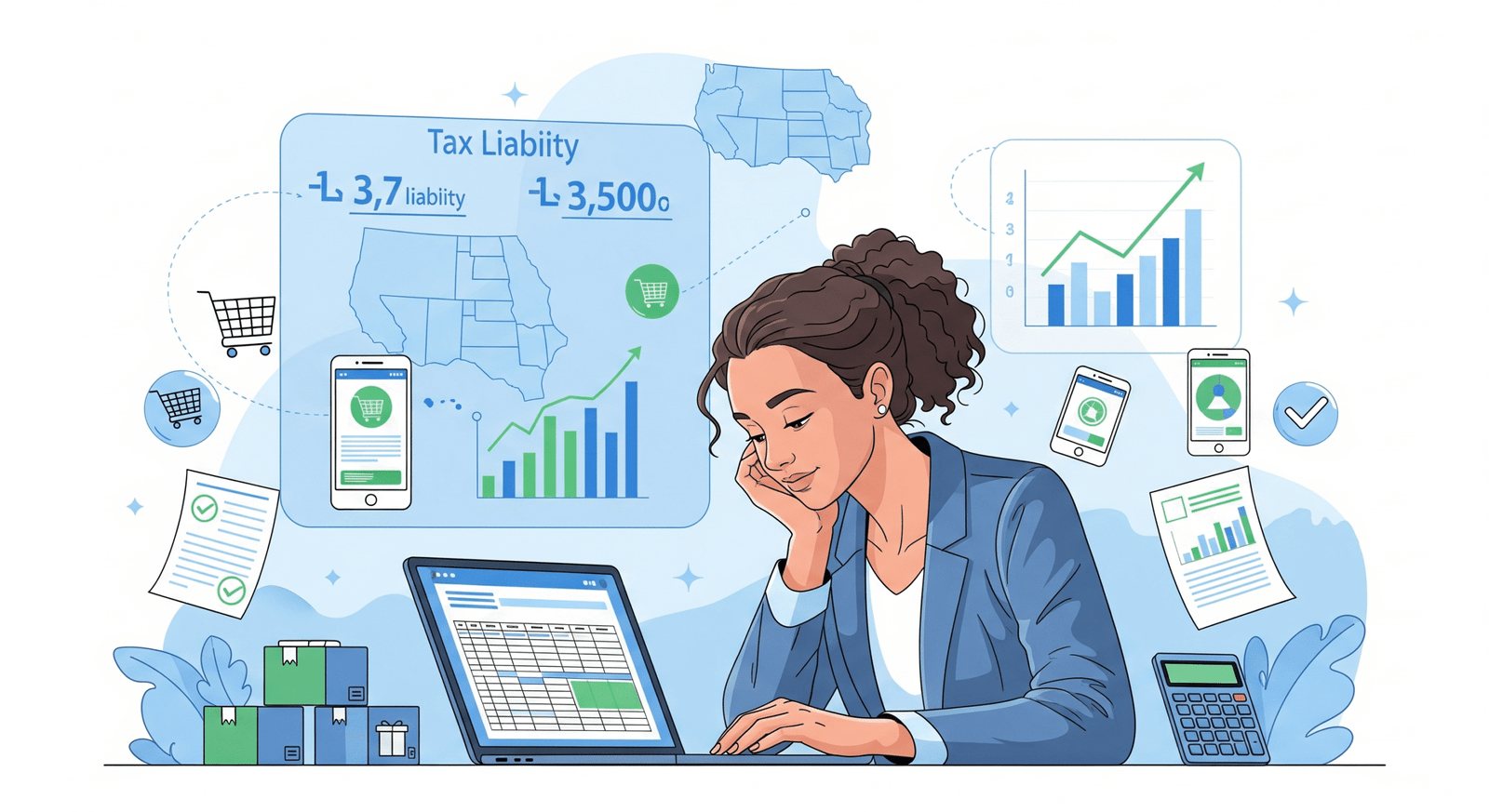
How We Helped an Ecommerce Business Eliminate $40,000 in Sales Tax Liability
How We Helped an Ecommerce Business Eliminate $40,000 in Sales Tax Liability Running an ecommerce business feels like navigating a minefield sometimes, doesn’t it? Just
Related Posts
Slash Your Tax Bill: Sales Tax Exemption Certificates Explained
Slash Your Tax Bill: Sales Tax Exemption Certificates Explained Hey there, savvy business owner! Ever feel like sales tax is just a never-ending riddle? You’re...
Read More
September 2025 Sales Tax Update: Laws Affecting Your Business
September 2025 Sales Tax Update: Laws Affecting Your Business Have you checked your sales tax obligations lately? If not, you might be walking into a...
Read More
Sales Tax on Services: When to Charge Beyond SaaS & Digital
Sales Tax on Services: When to Charge Beyond SaaS & Digital Introduction Running a service-based business means navigating a complex maze of sales tax rules...
Read More