Does the phrase “sales tax compliance” make you feel like you just opened a 300-page instruction manual written in a language you have never studied? You are not alone. Thousands of U.S. business owners and online sellers wrestle with the same questions every single year. And the honest truth? Getting it wrong can cost you far more than the taxes themselves.
Sales tax compliance is one of the most misunderstood obligations in U.S. business. Since the landmark 2018 Supreme Court ruling in South Dakota v. Wayfair, Inc., the rules changed dramatically for any business selling online. States now have the power to require you to collect and remit sales tax even if you have zero physical presence there. On top of that, California introduced over 100 new district sales tax rates that took effect on April 1, 2025 alone, and the pace of change shows no sign of slowing down.
So, whether you run an e-commerce store, a SaaS company, or a small brick-and-mortar business selling across state lines, this article breaks down the most pressing sales tax compliance questions and gives you clear, expert-backed answers. Let’s get into it.
What Exactly Is Sales Tax Compliance, and Why Does It Matter?
Think of sales tax compliance as the ongoing act of doing things right at every stage of the tax process. It means correctly determining where you owe tax, registering in those states, collecting the right amount from customers, filing on time, and remitting what you owe to the appropriate state authority.
Drop the ball on any one of those steps, and you are looking at potential audits, interest charges, back taxes, and penalties. Dropping the ball on sales tax compliance can lead to fines, legal problems, and even reputational damage for your business. For e-commerce sellers in particular, the risks are even sharper because your customer base likely spans dozens of states.
The Most Common Sales Tax Compliance Questions, Answered
1. Do I Have Nexus in Multiple States?
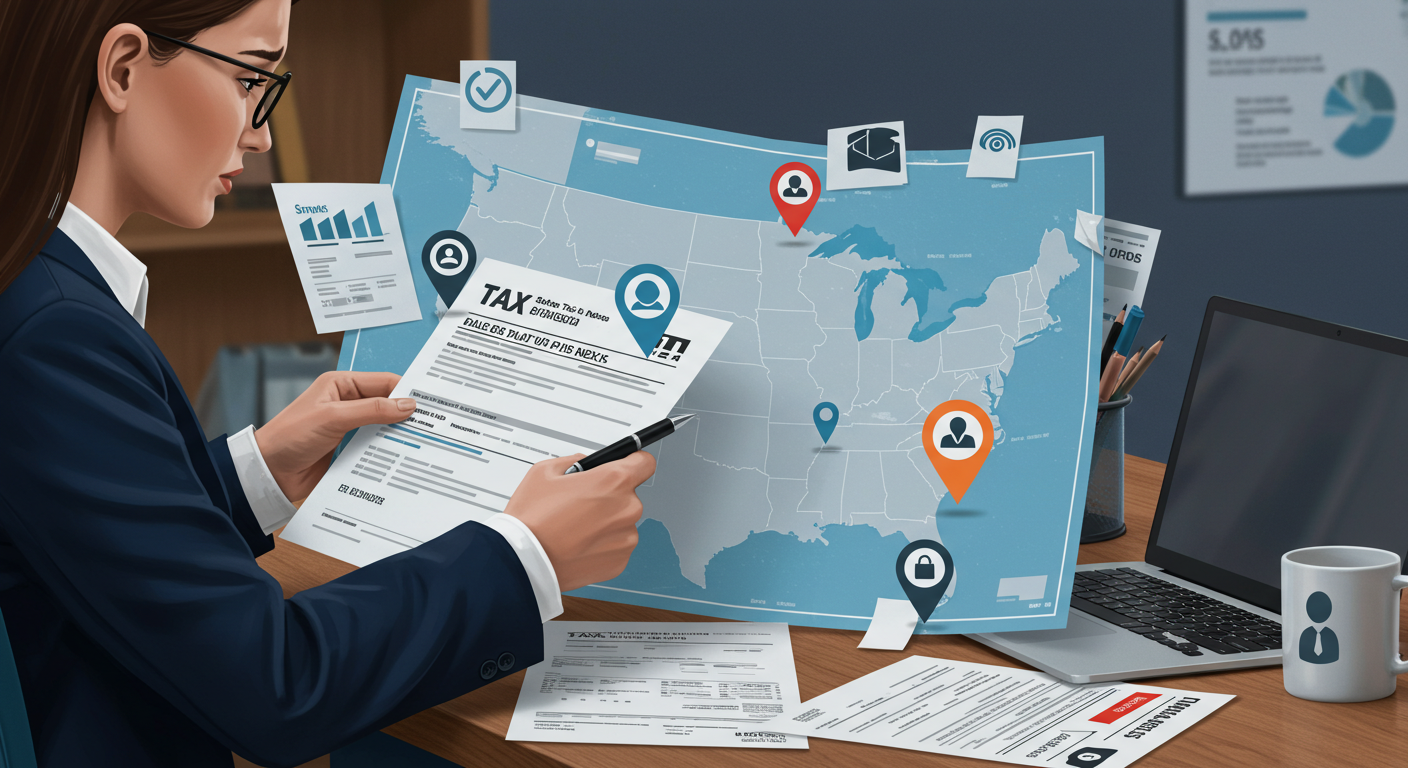
This is, without question, the most foundational sales tax compliance question. Nexus is simply the legal connection between your business and a state that triggers a tax obligation. If you have nexus in a state, you must collect and remit sales tax there.
Before 2018, nexus mostly meant having a physical presence — a store, warehouse, or employee in a state. The Wayfair decision changed everything. Now, most states use what is called economic nexus, which means your sales volume or transaction count alone can trigger compliance obligations, regardless of where your business is physically located.
Physical Nexus vs. Economic Nexus: What’s the Difference?
- Physical nexus arises from tangible presence: a storefront, office, warehouse, or even an employee working remotely in a state.
- Economic nexus arises purely from sales activity. The most common threshold is $100,000 in annual sales or 200 separate transactions into a state — though these thresholds vary and continue to evolve.
If a business surpasses an economic nexus threshold but does not register in that state, it creates a “prior period liability.” If a state discovers the nexus through audits of customers or marketplace data, it can demand all uncollected taxes from the date the threshold was crossed.
Here’s the practical takeaway: review your sales data across all states at least quarterly. Do not wait for a notice to arrive in the mail.
2. When Do I Need to Register for Sales Tax?
Once you establish nexus in a state, the clock starts ticking. You should register as soon as you cross the economic nexus threshold — often within 30 days — to avoid penalties.
Registration means applying for a sales tax permit with that state’s department of revenue. Every state has its own process, forms, and timelines. Some are quick online applications. Others are more involved. Either way, you cannot legally collect sales tax in a state without a valid permit.
A few important nuances to keep in mind:
- File even when you collect nothing. You must file a return for every state you are registered in, even if you did not collect any tax during the filing period. Submitting a zero return helps you avoid late fees or penalties that some states impose for missed filings.
- Filing frequency matters. States assign filing schedules — monthly, quarterly, or annually — often based on your sales volume in that state. Check each state’s rules carefully.
- Home-rule states add another layer. Home-rule states — including Alabama, Alaska, Arizona, Colorado, and Louisiana — require businesses to understand a range of local tax laws administered at the city or county level, adding significant complexity to compliance efforts.
3. What Do I Actually Need to Collect and Remit?
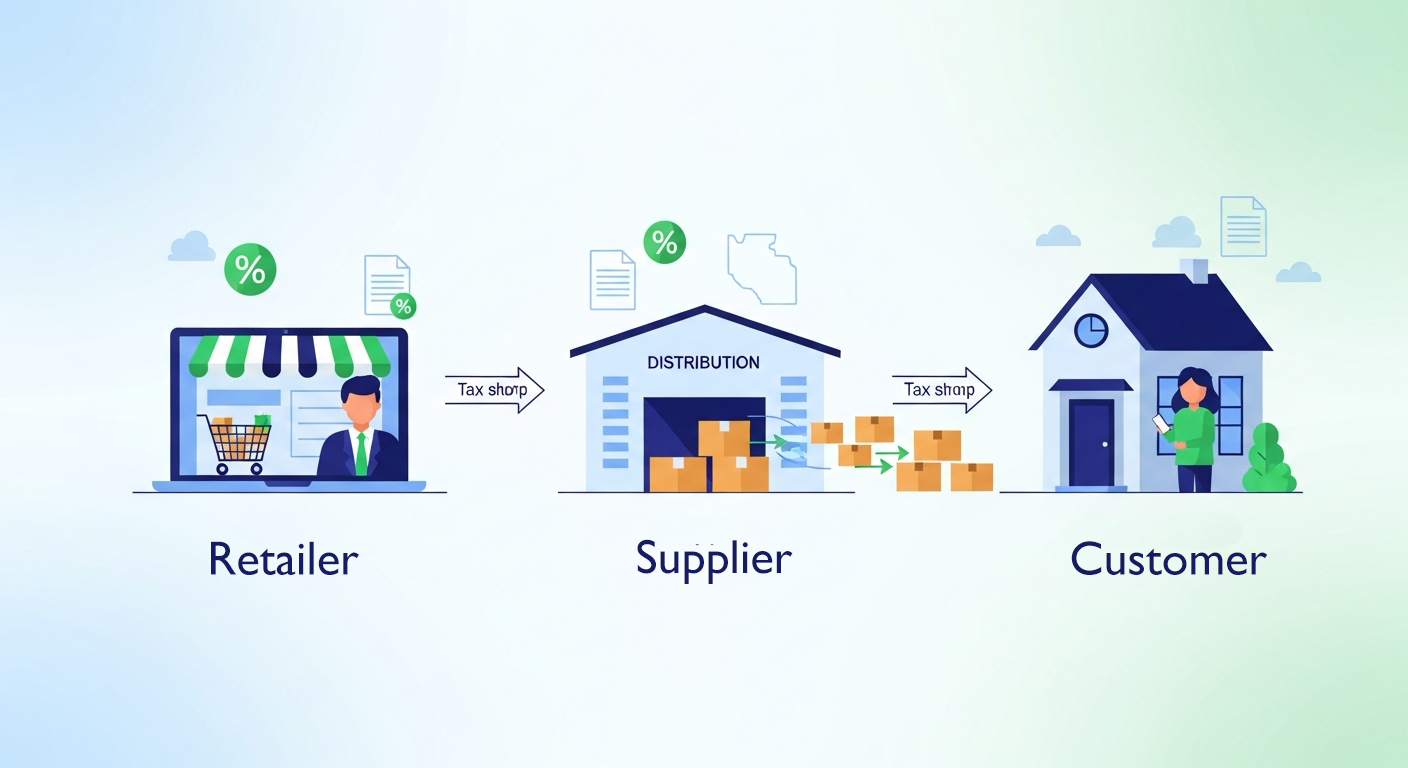
You collect sales tax from your customers at the point of sale, then remit that collected amount to the state on the schedule they assign you. Simple enough in principle. But the rates? That is where things get complicated fast.
Origin-Based vs. Destination-Based Sourcing
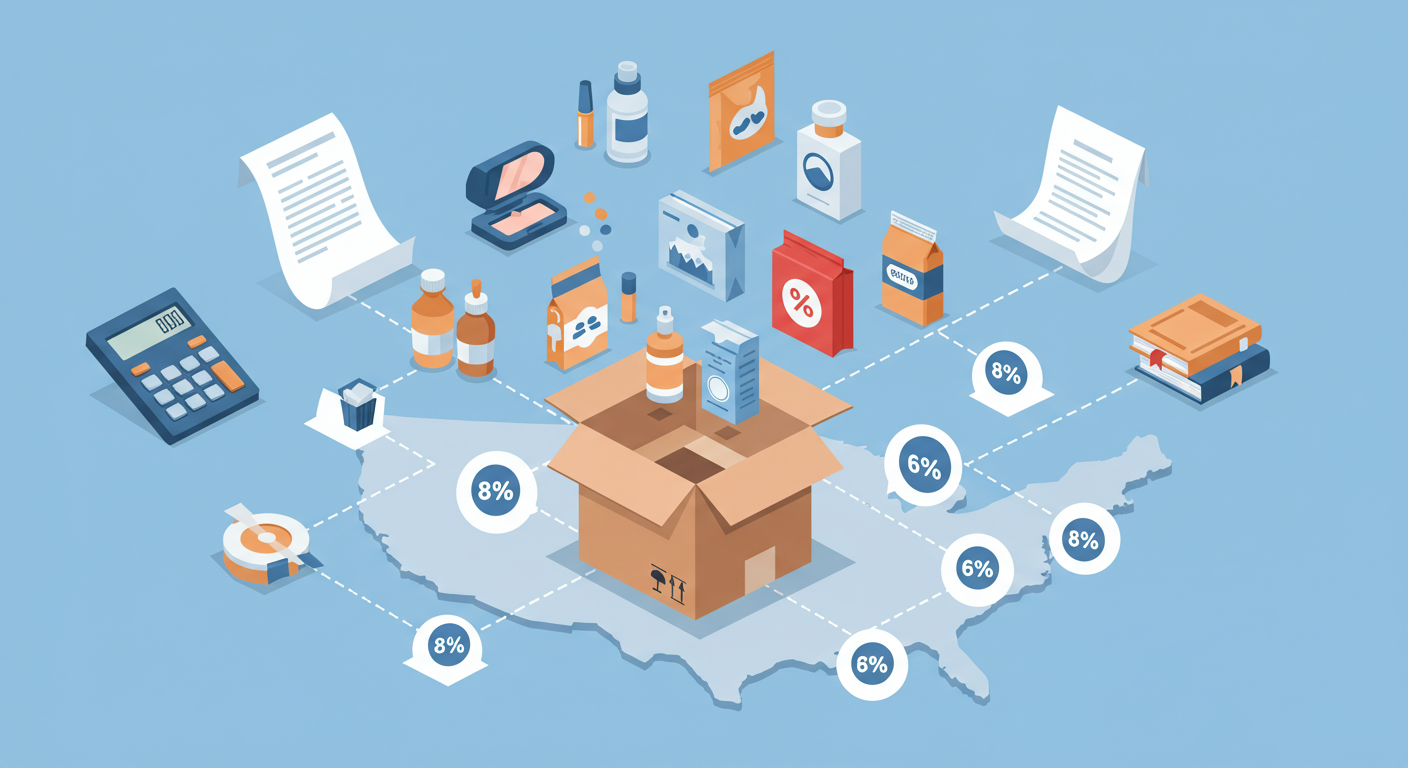
Most states use destination-based sourcing, meaning you apply the tax rate based on where your customer is located, not where you are. In a destination-based state, the state rate may be 4%, but additional taxes imposed by the county and city can lead to rates that are nearly double. That means a single customer zip code can involve multiple overlapping tax rates.
A handful of states use origin-based sourcing, meaning the seller’s location determines the rate. Knowing which rule applies in each state where you have nexus is critical. Misapplying sourcing rules is one of the most common — and costly — sales tax compliance errors businesses make.
4. How Do Exemption Certificates Work?
Not every sale is taxable. Some of your buyers may be resellers, nonprofits, or businesses purchasing for exempt purposes. When you sell to an exempt buyer and do not collect sales tax, you need to protect yourself with documentation.
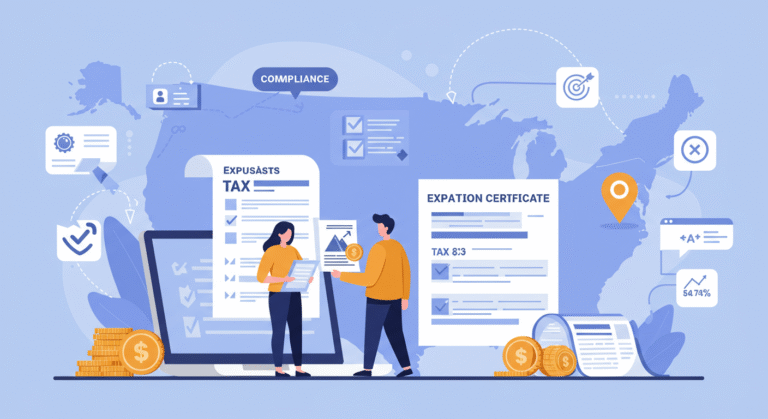
That documentation is called an exemption certificate. The buyer provides it to you before the sale, and you keep it on file. If you are ever audited, these certificates are your proof that you legitimately skipped the tax on those transactions.
Here is what many businesses get wrong:
- They let certificates expire. Certificates have validity periods that vary by state. Expired certificates mean those sales can become taxable retroactively — a serious audit exposure.
- They never collect them at all. If a customer claims a tax exemption and you have no certificate on file, the liability shifts to you.
- They do not track them systematically. Depending on the marketplace or customer base, you could be dealing with a huge number of certificates. Having a system to collect and store exemption certificates is crucial to maintaining sales tax compliance.
For a deeper look at managing these documents, check out our article on Exemption Certificate Compliance.
5. What Happens If I Sell on Amazon, Etsy, or Shopify?
Great question, and one that confuses a lot of online sellers. Most major platforms now operate as marketplace facilitators, which means the platform itself collects and remits sales tax on your behalf in most states. So, does that mean you can relax? Not entirely.
What Marketplace Facilitator Laws Mean for You
Even though the marketplace handles tax collection in states with these laws, sellers may still need to register and file returns. In many states, sales through marketplaces count toward your economic nexus threshold.
Additionally, if you sell through your own website alongside your marketplace listings, those direct sales are entirely your responsibility. The nexus you establish through one channel can create obligations across all your channels. This “cross-contamination” of nexus catches many sellers completely off guard.
Amazon sellers in particular should review our article on What Amazon Isn’t Telling You About Your Sales Tax Liability for a detailed breakdown of where your obligations actually begin and end.
6. How Do I Handle Sales Tax on Digital Products or SaaS?
If you sell software, subscriptions, or digital downloads, welcome to one of the most rapidly changing areas of sales tax compliance. States are aggressively expanding their reach into digital goods and services, and the rules are all over the map.
Louisiana enacted a law taxing a wide range of digital products and services in early December 2024, with the change taking effect on January 1, 2025. Businesses were given very little time to prepare. Vermont began taxing remotely accessed prewritten software in mid-2024. Georgia started taxing digital products in January 2024. Virginia, meanwhile, has been actively considering legislation to tax digital downloads and SaaS, with its Joint Subcommittee on Tax Policy examining potential fiscal impacts.
The taxability of SaaS specifically is split nearly 50/50 across states. Some states treat it as a taxable product. Others treat it as a nontaxable service. A handful exempt it entirely. And these classifications change. Relying on last year’s research is genuinely risky here. For a thorough breakdown, read our guide on SaaS and digital goods tax.
7. What Triggers a Sales Tax Audit, and How Do I Prepare?
A sales tax audit is essentially a state’s way of verifying that you collected and remitted the right amounts. Audits can happen to any business, but certain red flags invite closer scrutiny:
- Discrepancies between your reported sales and your filed tax returns
- Sudden drops in tax collected relative to prior periods
- Payroll filings or business registrations in a state where you haven’t registered for sales tax
- High volumes of exempt sales without proper certificate documentation
States are becoming increasingly aggressive toward online sellers, and sales tax audits are becoming more common. States are also sending pre-audit questionnaires to both registered and unregistered businesses to identify who is not in compliance.
To prepare, keep organized records for at least four to seven years. That means sales by state, tax collected, exemption certificates, and filing confirmations. If you suspect you have unregistered back liability, ask a tax professional about a Voluntary Disclosure Agreement (VDA), which can dramatically reduce penalties for coming forward voluntarily before an audit notice arrives.
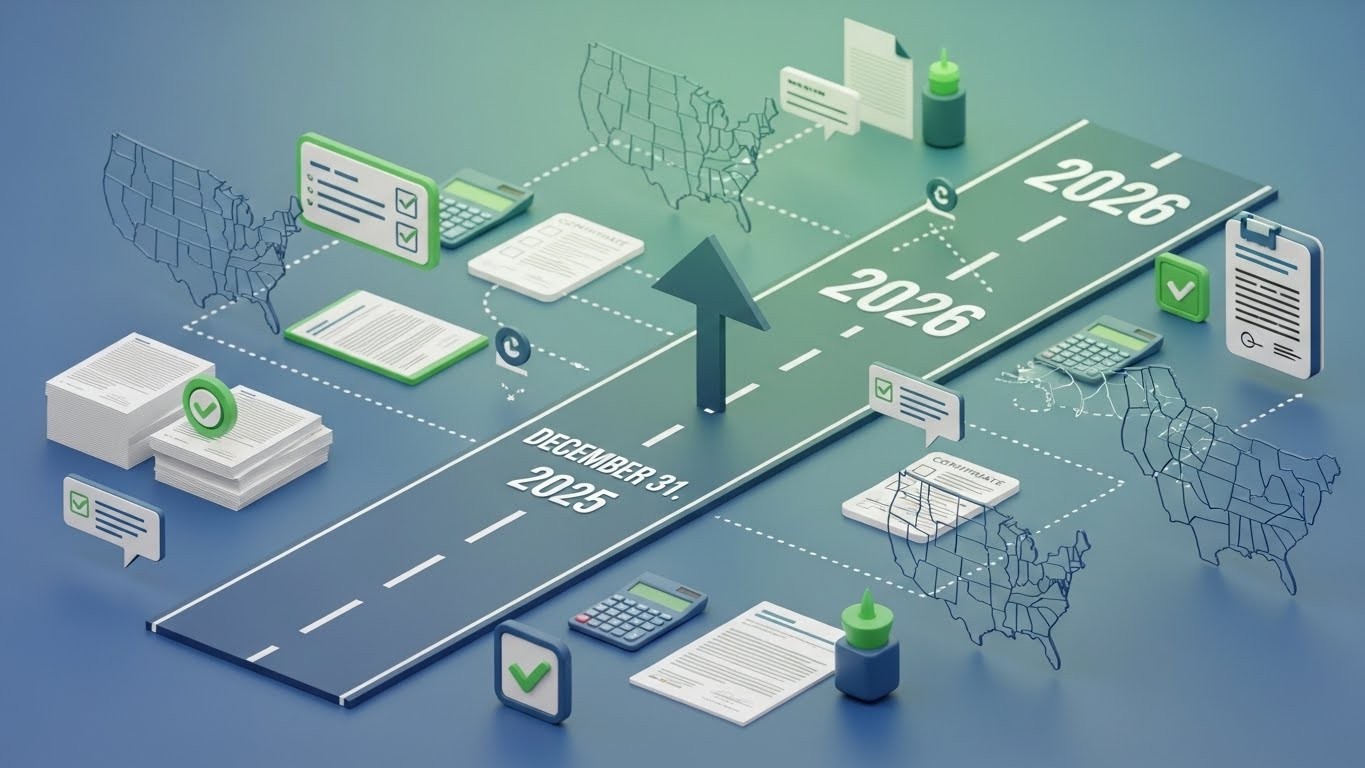
For a comprehensive look at year-end compliance steps, including catching nexus and certificate issues before they become audit triggers, we covered this in detail in our 2026 Sales Tax Roadmap.
Why Technology Alone Cannot Replace Human Expertise in Sales Tax Compliance
Automation tools are genuinely useful for sales tax compliance. They can calculate rates in real time, sync with your e-commerce platform, and handle repetitive filings. However, technology works from rules someone else has programmed into it. It cannot read between the lines of a state’s latest guidance bulletin. It cannot pick up the phone and negotiate a VDA on your behalf. It cannot analyze the nuances of your specific product taxability mix and flag where you are exposed.
Think of tax software like a GPS navigator. It is excellent for the open highway. But the moment you hit construction zones, detours, and local rules that have not been updated in the system, you need a human driver who knows the terrain.
Sales tax compliance requires judgment calls that only come from deep, state-specific expertise. A qualified specialist can identify exposures that automated tools miss entirely, advise you on the smartest path forward, and represent you if things get complicated. The stakes — back taxes, interest, and penalties across multiple states — are simply too high to trust to software alone.
Conclusion
Sales tax compliance is not a one-time checkbox. It is an ongoing process that demands attention, accuracy, and expertise across every state where you do business. From determining nexus and registering on time, to collecting the right amounts, managing exemption certificates, and preparing for potential audits, each step carries real financial consequences if handled carelessly.
Automation can help. Good record-keeping is essential. But nothing replaces the judgment of a qualified human expert who knows U.S. sales tax law inside and out. If any of the questions in this article left you with doubt about where your business stands, that doubt is worth addressing now, before a state notice does it for you.
Contact My Sales Tax Firm today for a free consultation. Our team of sales tax compliance specialists is ready to review your obligations, identify your risks, and help you get — and stay — fully compliant across every state where you sell.