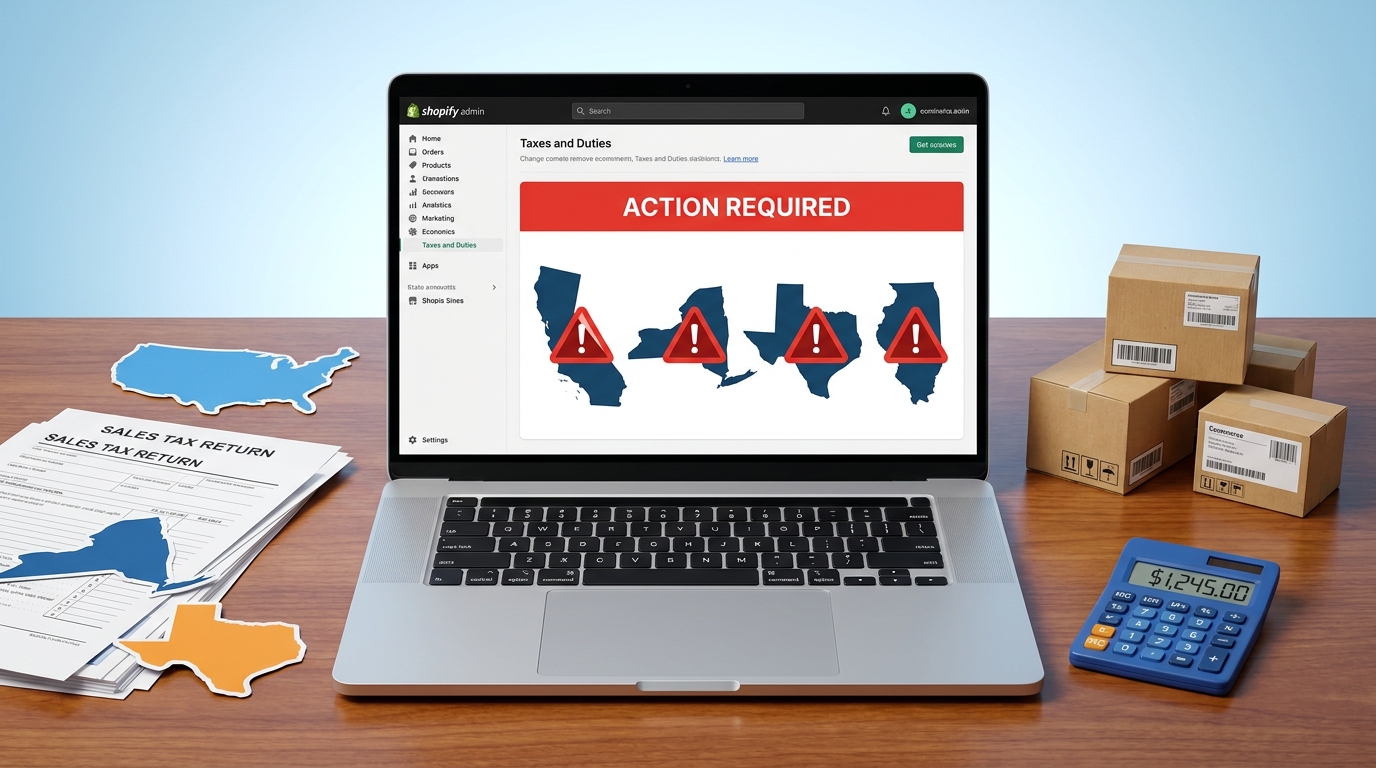
Picture this. You run a small online shop from your living room in Ohio. You’ve never opened an office anywhere else, never hired a single employee outside your state, and never shipped a pallet to a warehouse across the country. Yet one day, you discover that Texas, Florida, and Georgia all expect you to collect and remit sales tax to them. How is that even possible?
That’s exactly what economic nexus means. And if you’re selling products or services across state lines today, this is one of the most important sales tax concepts you’ll ever encounter. So let’s break it down together, simply and clearly.
What Is Economic Nexus? (In Plain English)
Think of “nexus” as a legal connection between your business and a state. That connection is what gives a state the right to require you to collect and send over sales tax. Traditionally, that connection was all about physical presence: a store, a warehouse, employees, or inventory inside a state’s borders.
Economic nexus is different. It’s based entirely on how much you sell into a state, not where your business physically sits. Cross a state’s sales threshold, and you’ve got a connection, even without a single box stored there.
The Old Rule: Physical Presence
For decades, the rule was clear. No physical footprint in a state meant no sales tax obligation there. This standard came from a 1992 Supreme Court case called Quill Corp. v. North Dakota. Remote sellers, especially early e-commerce stores, thrived under this rule. They could sell nationwide while only dealing with the sales tax rules of their home state.
But as online retail exploded, states began watching billions of dollars in tax revenue slip away. Something had to change.
The Wayfair Ruling Changed Everything
On June 21, 2018, the U.S. Supreme Court delivered a landmark 5-4 decision in South Dakota v. Wayfair, Inc. The Court replaced the old physical presence rule with a new economic nexus standard. Suddenly, a state could require any out-of-state seller to collect and remit its sales tax, as long as that seller crossed a defined revenue threshold. Within two years, all 45 states that have a statewide sales tax enacted economic nexus laws. No exceptions. If you sell online, this ruling applies to you.
How Economic Nexus Thresholds Work
So when exactly does economic nexus kick in? Each state sets its own rules, but thankfully, most follow a familiar pattern.
The $100,000 Benchmark Most States Use
In most states, the economic nexus threshold is $100,000 in sales, though some states also apply transaction-based rules or higher revenue thresholds.
Here’s a simple example. Suppose your e-commerce store ships $115,000 worth of products to customers in Colorado during 2025. You’ve crossed Colorado’s threshold. From that point forward, you have economic nexus there. You must register, collect, and remit Colorado sales tax.
Straightforward, right? Mostly. But the details get thorny fast, which is exactly why a trained professional matters more than any spreadsheet.
States With Higher Thresholds
A handful of states use a significantly higher bar:
- California: $500,000 in gross sales, no transaction count required
- Texas: $500,000 in gross sales
- New York: $500,000 in sales AND 100 separate transactions (both must be met simultaneously)
California and Texas both use $500,000 sales-only thresholds with no transaction count requirement. For many small businesses, these higher thresholds offer some breathing room. But never assume you’re safe. A strong sales quarter can push you over the line faster than you expect.
Transaction-Based Rules Are Disappearing
Many states once combined a dollar threshold with a transaction count, such as “$100,000 OR 200 separate transactions.” The intent was to catch high-volume, low-value sellers. But this created confusion and compliance burdens, especially for small shops selling low-cost items.
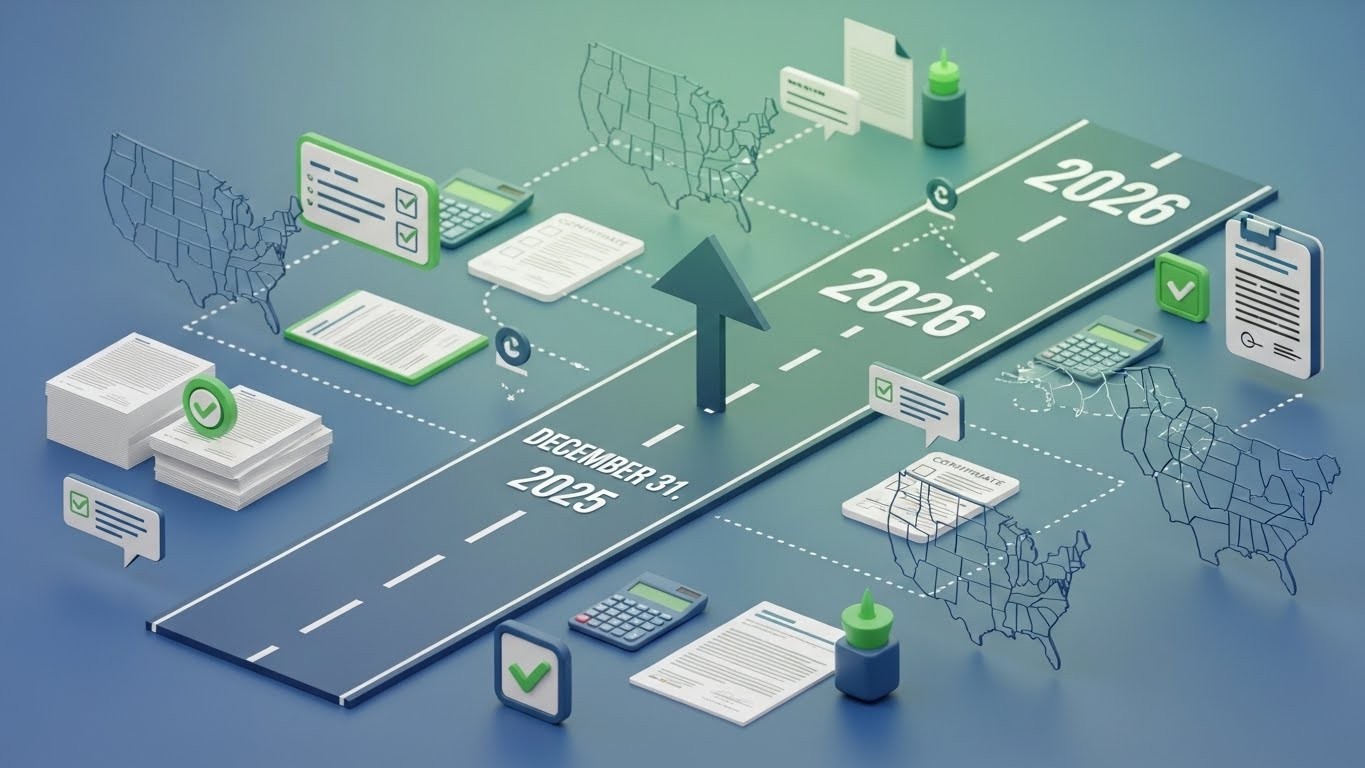
States are now dropping transaction-based triggers fast. Recent confirmed changes include: Alaska, which removed its 200-transaction threshold as of January 1, 2025, and Utah, which eliminated its transaction threshold effective July 1, 2025, leaving $100,000 in sales as the only trigger. Illinois followed suit effective January 1, 2026.
The takeaway? Dollar thresholds are becoming the only thing that matters. That simplifies tracking in one way, but also means more sellers can trigger economic nexus without noticing it creeping up on them.
Which States Have Economic Nexus Laws?
The short answer: nearly every one. Every state with a sales tax has implemented economic nexus requirements, creating compliance obligations for hundreds of thousands of businesses that previously had no filing requirements.
Missouri was the final holdout, joining the rest in 2023. The only states without a statewide sales tax (Alaska, Delaware, Montana, New Hampshire, and Oregon) technically fall outside the standard framework, though Alaska’s local jurisdictions have their own unique remote seller rules.
If you sell to customers across the U.S., you’re operating in a landscape where economic nexus applies almost everywhere. The question isn’t whether it affects you. The question is whether you’ve already crossed a threshold somewhere and don’t know it yet.
How to Know If You’ve Triggered Economic Nexus
This is where most small businesses get caught off guard. Crossing a threshold and knowing you’ve crossed one are two very different things.
What Counts Toward Your Threshold?
Here’s what surprises a lot of business owners: the definition of “sales” isn’t the same in every state. Depending on where you’re selling, your threshold calculation might include:
- Gross sales before any discounts or returns
- Exempt sales, even transactions that aren’t taxable (many states still count these)
- Marketplace sales through platforms like Amazon or Etsy in certain states
So don’t just pull your taxable revenue and call it done. Exempt sales can count toward your nexus threshold, so you may need to register and report even those sales. Some states only count exempt sales of tangible personal property, while others also include exempt services. Only looking at taxable revenue can give you a dangerously incomplete picture.
If you sell on Amazon, pay close attention. Even though Amazon collects tax on your behalf in most states under marketplace facilitator laws, your nexus exposure may still be broader than you think. Our article on Amazon FBA sales tax nexus covers this in detail.
Measurement Periods Matter More Than You Think
States also vary on how they measure the period of your sales:
- Most states look at the current or prior calendar year.
- Some states (including Illinois, Texas, and Tennessee) use a rolling trailing 12-month window.
- New York uses the preceding four sales tax quarters.
If you crossed $100,000 in a state during 2024, you may have nexus throughout all of 2025, even if your 2025 sales drop back below the threshold.
This is a detail that even experienced bookkeepers miss. And it’s exactly the kind of nuance where a human expert earns their keep.
What You Must Do After Crossing the Threshold
Once you’ve triggered economic nexus in a state, the clock starts. Here’s what needs to happen:
Your Step-by-Step Compliance Roadmap
- Register for a sales tax permit with that state’s Department of Revenue. Many states require registration within 30 days of crossing the threshold.
- Research taxability for your specific products or services in that state. What’s taxable in one state may be exempt in another.
- Begin collecting sales tax from customers in that state on all applicable transactions.
- File and remit returns according to the state’s assigned filing frequency, whether monthly, quarterly, or annually.
- Monitor thresholds continuously in all states where you sell, especially during high-volume seasons.
Failing to register in a state where nexus exists can lead to penalties and liability for uncollected back taxes.
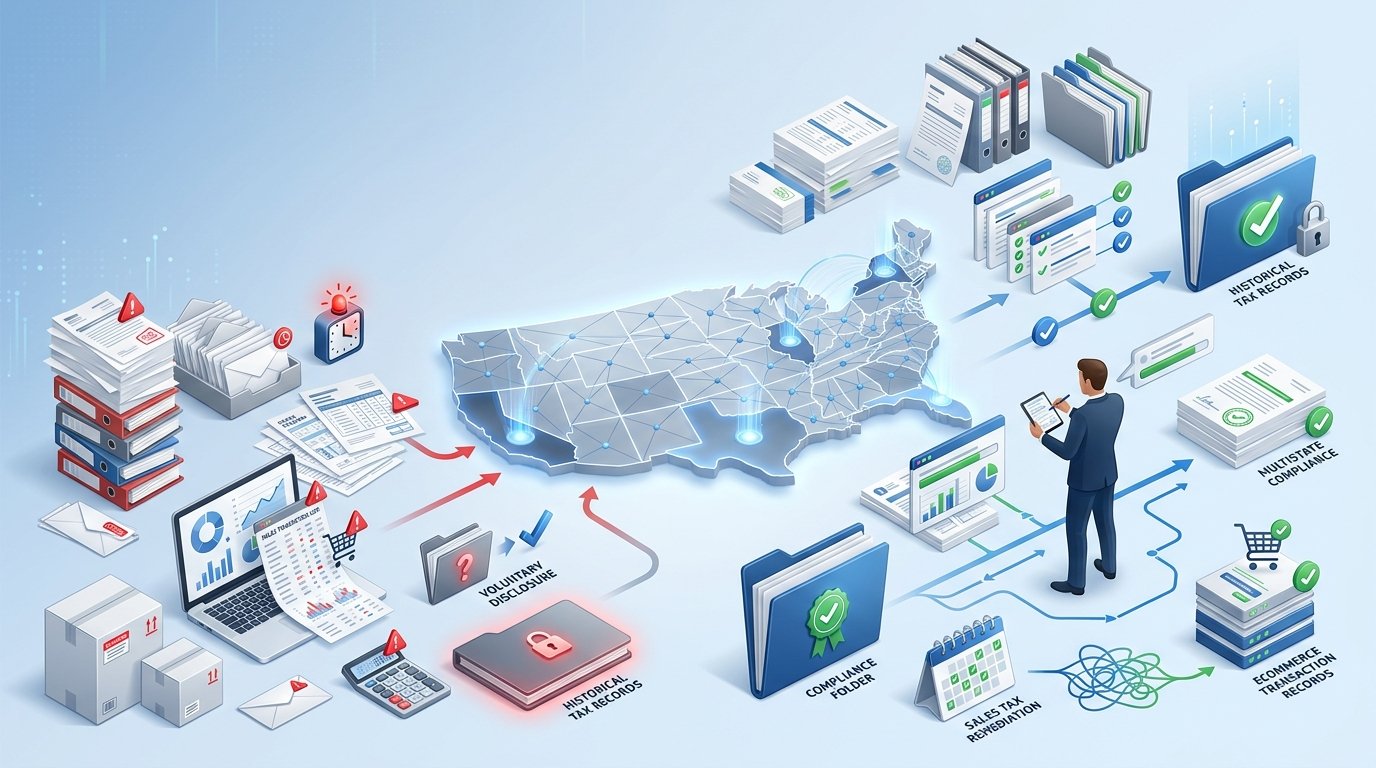
If you’ve been selling into a state for a while and recently realized you crossed a threshold without registering, don’t panic. Most states offer voluntary disclosure agreements that allow you to come into compliance while reducing or waiving back penalties. We cover this scenario thoroughly in our guide on what happens when you’ve never collected sales tax.
Common Mistakes Small Businesses Make
Are you making any of these? You’d be surprised how many businesses do.
- Assuming $100,000 is “too high to hit.” A steady stream of small orders adds up quickly. A seasonal sales spike can push you over without warning.
- Ignoring exempt sales. Selling tax-exempt goods doesn’t mean those sales are invisible to every state’s nexus threshold.
- Assuming marketplace sales don’t create nexus. Amazon collecting tax on your behalf is not the same as having zero obligations. Read our breakdown of what Amazon isn’t telling you about your sales tax liability before you assume you’re covered.
- Using the wrong address for tax sourcing. The address that determines your sales tax obligation isn’t always obvious. Our article on which address determines sales tax digs into this common point of confusion.
- Waiting too long after crossing a threshold. Registration delays create back-tax exposure. Act promptly.
Why Technology Alone Won’t Save You
Sales tax automation tools are genuinely useful. They can flag threshold crossings, apply tax rates automatically, and even help with filing. But they are not a substitute for professional judgment, and here’s why.
Smaller businesses face a real economic disadvantage compared to large corporations that already have sophisticated, multistate-oriented accounting systems and dedicated compliance resources. Automation tools work within the parameters you set them up with. If you set them up wrong, or if a state changes its rules mid-year, the tool may keep chugging along without ever alerting you to a problem.
Consider: some states count exempt sales toward nexus. Some have home-rule localities with their own additional layers of compliance. There continues to be a lack of uniformity in definitions, taxability, sourcing, rates, filing frequencies, and compliance responsibilities among the states. No off-the-shelf tool fully accounts for every single one of these nuances in real time.
Technology handles repetitive tasks well. But identifying your true nexus exposure, correcting past errors, and making judgment calls on edge cases? That still requires a knowledgeable human in your corner. For a broader look at how these compliance questions layer together, our sales tax compliance FAQs is a great resource to bookmark.
Conclusion
Economic nexus fundamentally changed the rules for U.S. businesses after the 2018 Wayfair ruling. Today, your revenue in a state matters far more than your physical address. Thresholds, measurement periods, and taxability rules vary across 45-plus jurisdictions, and the cost of missing them can be steep: back taxes, interest, penalties, and even audits.
The good news is that none of this has to be overwhelming. With the right guidance, you can get ahead of your economic nexus obligations before a state department of revenue finds you first. At My Sales Tax Firm, we help small businesses, CPAs, and bookkeepers do exactly that, every day. Whether you’re unsure if you’ve crossed a threshold or you already know you have, we’re here to help. Reach out to My Sales Tax Firm today for a free consultation and get clear answers about exactly where your business stands.